Test cricket runs on rhythm. Not just the rhythm of overs and wickets, but the quieter cadence built into every day of play – the lunch, the appeals, the slow walk back to the pavilion, and of course, the tea break.
Tea Break Time in Test Cricket
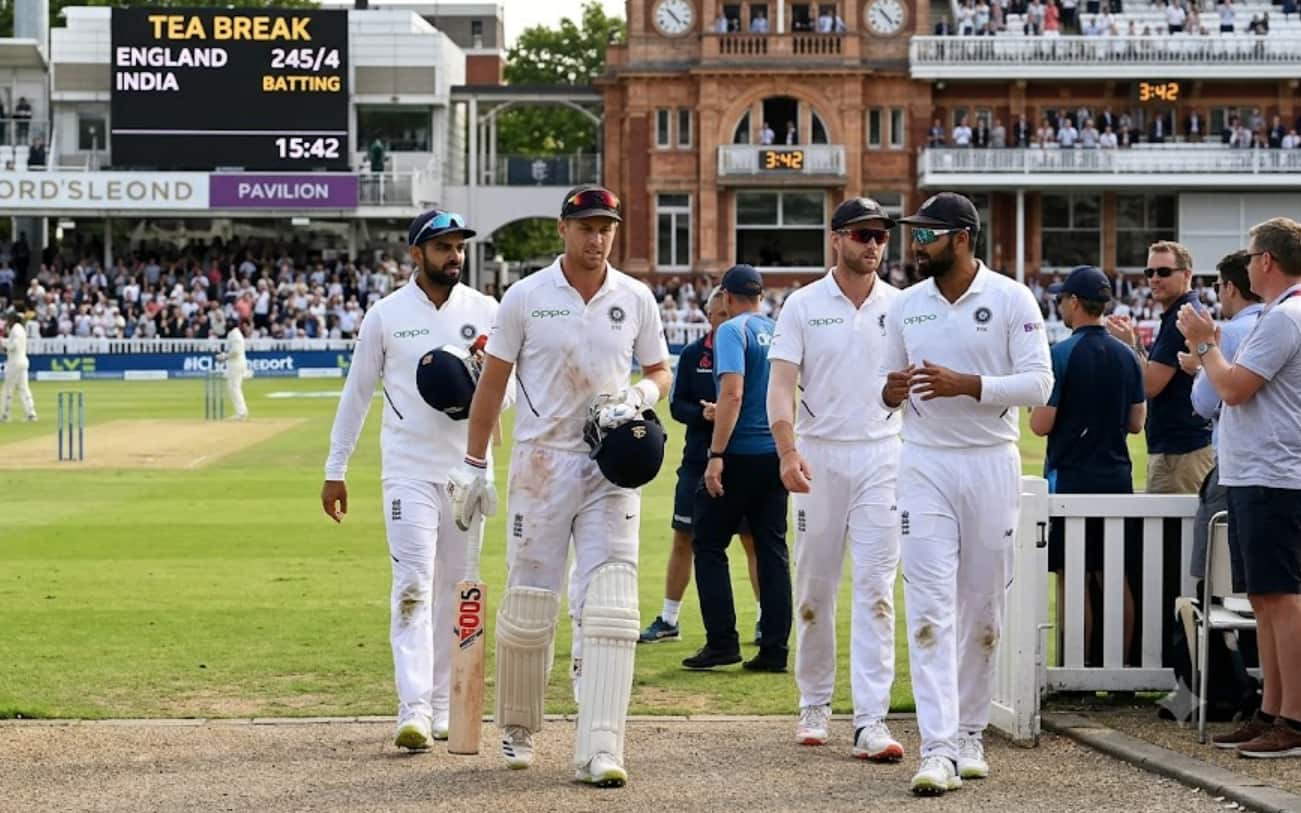
If you’ve sat through a Test match and wondered exactly when the tea break happens, how long it lasts, and why it even exists in a cricket match at all, you’re in the right place.
What Is Tea Break Time in Test Cricket?
Tea break time in Test cricket is the second scheduled interval of each playing day. It comes after the second session and lasts for 20 minutes.
A standard day in a Test match is divided into three sessions of roughly two hours each, with two breaks separating them:
- Lunch break — 40 minutes, after the first session
- Tea break — 20 minutes, after the second session
- Play then continues into the final session before stumps are called
So if a day’s play begins at 9:30 AM, the tea break typically falls somewhere around 3:30 PM, depending on the start time and any interruptions.
That said, the exact timing isn’t always fixed. If play is held up by rain or bad light earlier in the day, the tea break may be pushed back or rescheduled by the on-field umpires in consultation with match officials.
Where Did the Tea Break Come From?
The tradition goes back to England in the 1800s, when cricket matches were essentially all-day social events.
Tea was a cornerstone of English daily life, and it was only natural that a mid-afternoon break for tea became part of the game’s schedule as Test cricket took shape.
By the time international Test cricket became more structured in the late 19th century, tea intervals were already a fixed part of the day.
Players would retreat to the pavilion, drink tea, eat light refreshments, and return to the field refreshed.
What started as a cultural habit eventually became law.
Today, the Laws of Cricket (governed by the MCC) formally define when breaks happen, how long they last, and under what conditions they can be altered.
Tea Break Rules You Should Know
A few things to keep in mind when it comes to how tea break time works in practice:
- It can be taken early or delayed. If a wicket falls within a few minutes of the scheduled tea time, the umpires can choose to take the break immediately or hold it until the new batter is settled. Similarly, if a team is close to a session milestone, the break may shift slightly.
- It can be skipped in special circumstances. If bad weather has already eaten significantly into the day’s play, match officials have the option to combine sessions or move tea to a different slot to maximize playing time.
- Duration stays fixed. Regardless of what’s happening on the field — even a tense last-wicket partnership — the tea break itself is always 20 minutes once it starts. No extensions.
- Day-night Tests change the naming, not the concept. In day-night Tests, the breaks are often relabelled as “tea” and “dinner” to reflect the altered playing hours. The second interval in a day-night game essentially replaces what would traditionally be the tea break.
Why 20 Minutes? The Purpose Behind the Break
It’s short enough not to disrupt momentum, long enough for players to actually rest.
After two sessions of intense concentration – batting, fielding, bowling — 20 minutes gives teams time to rehydrate, receive physio attention, and talk through what’s working and what isn’t.
For batters who’ve been at the crease for hours, stepping away briefly can actually help sharpen focus for the final session.
For captains and coaches, the tea break is a valuable window.
Tactical adjustments – a bowling change, a field reshuffle, a batting order tweak – often crystallize during this pause.
Some of the most famous comebacks and collapses in Test history have followed a tea break.
How Tea Breaks Differ Across Test-Playing Nations?
The concept is universal, but the experience varies by country.
- In England, the tradition is taken seriously. Tea is often served to players in the dressing room with sandwiches and biscuits, keeping the original spirit of the break alive.
- In India, the tea break is more functional than ceremonial at the ground level, but fans watching from home often pause to grab their own chai — mirroring the rhythm of play in a small way.
- In Australia, the focus is heavily on recovery. Facilities and nutrition have become increasingly scientific, and the tea break is treated as a short but efficient recovery slot.
The cultural flavour differs, but the 20-minute structure stays the same everywhere.
Tea Break vs. Lunch Break: What’s the Difference?
Both are scheduled intervals, but they’re not the same in length or purpose.
| Feature | Lunch Break | Tea Break |
|---|---|---|
| Duration | 40 minutes | 20 minutes |
| Position in the day | After 1st session | After 2nd session |
| Typical use | Full meal, longer rest | Light refreshment, quick reset |
Lunch is the longer, mid-day pause. Tea is shorter and sharper — more of a reset than a full rest.
Does Tea Break Exist in ODIs and T20s?
No. Tea breaks are specific to Test cricket.
In ODIs and T20Is, matches don’t have tea breaks.
The closest equivalent is a drinks break, which is taken on the field during an innings and lasts only a few minutes.
There’s also the innings break between the two sides batting, which typically runs for 10–20 minutes depending on the format.
The absence of tea breaks in shorter formats is simply a product of the shorter match duration – there’s no structural need for a second interval in a four-hour game.
Frequently Asked Questions
- How long is the tea break in Test cricket?
The tea break lasts 20 minutes. It is the shorter of the two daily intervals, with lunch being 40 minutes.
- When does the tea break happen during a Test match day?
It follows the second session of the day, typically around mid-to-late afternoon, depending on the match start time and any interruptions from weather.
- Can the tea break be moved or cancelled?
Yes. Umpires can delay or reschedule the tea break if play has been significantly interrupted by rain or bad light, to make up for lost overs.
- What happens in day-night Test matches?
Day-night Tests use adjusted schedules. The second interval is usually called a “dinner break” rather than tea, but serves the same structural role.
- Why is there no tea break in T20 or ODI matches?
Shorter formats don’t require a second interval. Only Test cricket — with its six-hour playing days — has both a lunch and tea break built into the schedule.
- Did the tea break originate in cricket?
The tea break as a formal part of cricket originated in England during the 19th century, where afternoon tea was already a cultural norm. Cricket adopted it and eventually codified it through the Laws of Cricket.
Conclusion:
Tea break time in Test cricket is exactly 20 minutes, falls after the second session of each playing day, and has been part of the game since cricket’s earliest days in England.
It’s not just a tradition for tradition’s sake – it gives players a genuine reset, creates a tactical window for teams, and gives fans a natural pause to process the day’s play.
In a format defined by patience and endurance, the tea break is a small but meaningful rhythm.
Next time you’re watching a Test and that second session ends, you’ll know precisely what’s happening – and why.
Also Check:
About the Author
