The Impact Player rule in IPL has transformed how teams approach tactical decisions during matches.
Since its introduction in 2023, this substitution system has sparked intense debate among players, coaches, and cricket fans worldwide.
While some praise it for adding strategic depth, others argue it tilts the balance too heavily toward batting firepower.
But what exactly does this rule entail, and why has it become such a defining feature of modern IPL cricket?
Understanding the Impact Player rule isn’t just about knowing when a substitution can happen.
It’s about recognizing how this single tactical move can shift momentum, change match outcomes, and even influence player selection strategies before the game begins.
Let’s break down everything you need to know about this controversial yet fascinating rule.
Impact Player Rule in IPL Explained
What Is the Impact Player Rule in IPL?
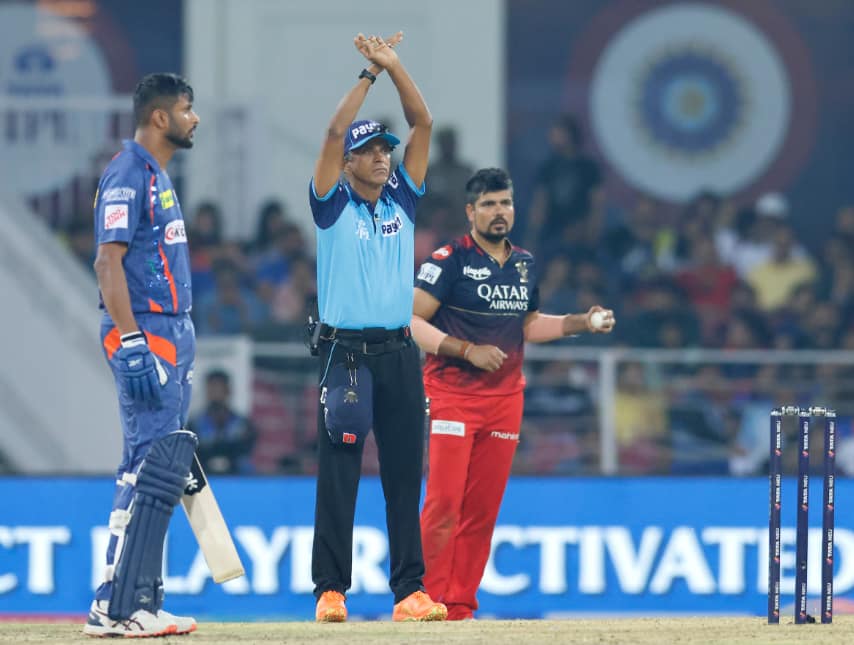
The Impact Player Rule in IPL allows each team to make one tactical substitution during the match by replacing any player from the playing 11 with one of five named substitutes.
This isn’t a simple fielding substitute. The incoming player gains full participation rights and can bat, bowl, field, or even captain if needed.
Before each match, teams submit their starting XI along with up to five substitute players.
During the game, the captain can strategically swap out one player for a substitute based on match conditions.
This substitute becomes the Impact Player, essentially functioning as a 12th active participant with complete playing privileges.
The rule operates within strict boundaries.
Only one Impact Player is permitted per team per match.
Once a player is replaced, they cannot return to the field in any capacity.
The four remaining substitutes stay restricted to fielding duties and cannot bat or bowl under any circumstances.
When Impact Player Rule in IPL Was Introduced
The Impact Player rule in IPL 2023 marked its official debut in the tournament, but its origins trace back earlier.
BCCI first experimented with this concept during the 2022-23 Syed Mushtaq Ali Trophy, India’s premier domestic T20 competition.
After assessing its impact on domestic cricket, officials decided to implement it in IPL starting from the 2023 season.
The IPL Governing Council formally announced that the Impact Player regulation would continue through the 2025-2027 cycle.
This decision came after reviewing data from the inaugural season, which showed increased scoring rates and more tactical flexibility for team management.
What started as a domestic trial has now become a permanent fixture in IPL, though international cricket and most other T20 leagues haven’t adopted similar provisions.
How the Impact Player Rule Works: Step-by-Step Process
Team Sheet Submission
After the toss, each team provides a list of 11 playing members plus five substitutes to the match referee.
The captain doesn’t need to declare which substitute will become the Impact Player at this stage.
Timing the Substitution
Teams can introduce the Impact Player only during natural breaks: at the start of an innings, at the end of an over, immediately after a wicket falls, or when a batsman retires.
The captain must inform the fourth umpire before making the change.
Bowling Restrictions During Substitution
If the fielding team brings in their Impact Player mid-over after a wicket, that new player cannot bowl the remaining deliveries of that over.
However, batting teams face no such restriction.
Their Impact Player can walk in and bat immediately after replacing another player.
Overseas Player Limitation
IPL rules cap overseas players at four per team on the field simultaneously.
If a team starts with four foreign players, the Impact Player must be Indian.
Teams beginning with three or fewer overseas players can bring in a foreign Impact Player without violating this limit.
Player Elimination
The replaced player exits the match permanently. They cannot return as a fielder, batsman, or bowler.
The Impact Player assumes full status, receives the match fee, and appears on the official scorecard with an [IP] designation.
Impact Player vs Regular Substitute: Understanding the Difference
| Aspect | Impact Player | Regular Substitute |
|---|---|---|
| Batting Rights | Yes, can bat normally | No, cannot bat |
| Bowling Rights | Yes, full 4-over quota | No, cannot bowl |
| Fielding Rights | Yes, unlimited | Yes, but temporary |
| Number Allowed | One per team per match | Up to four per team |
| Original Player Return | Cannot return | Original player can return |
| Match Fee | Receives full match fee | Does not receive match fee |
Regular substitutes serve traditional roles as 12th men who bring drinks, cover fielding positions temporarily, and provide support.
They step in when players need bathroom breaks or injury assessments but cannot influence the game through batting or bowling.
The Impact Player fundamentally differs by gaining complete participation privileges.
Teams often use this provision to strengthen either their batting or bowling lineup depending on match phase and conditions.
Can Foreign Players Be Impact Players in IPL?
Yes, overseas cricketers can serve as Impact Players, but team composition determines eligibility.
IPL’s four-overseas-player rule remains non-negotiable.
If a team fields four foreign players in their starting XI, the Impact Player must be Indian to maintain compliance.
Teams starting with three or fewer overseas players retain flexibility.
They can introduce a foreign Impact Player without breaching regulations, provided the total foreign player count doesn’t exceed four at any moment.
A practical example occurred in the RR vs MI match on April 7, 2026.
Rajasthan Royals substituted Donovan Ferreira (overseas) with Ravi Bishnoi (Indian), while Mumbai Indians replaced AM Ghazanfar (overseas) with Sherfane Rutherford (overseas). Mumbai’s move worked because they maintained their overseas count within limits.
First Impact Player in IPL History
Tushar Deshpande holds the distinction of being the first Impact Player in IPL history.
During the opening match of IPL 2023, Chennai Super Kings brought Deshpande in to replace Ambati Rayudu at the start of the second innings.
This substitution set the precedent for how teams would use the rule throughout the season.
The tactical logic was clear: CSK strengthened their bowling attack for the defense phase by introducing a specialist pace bowler.
Deshpande’s introduction demonstrated the rule’s primary purpose, allowing teams to optimize their lineup for specific match situations.
Is Impact Player Rule in IPL 2026 Still Active?
Yes, the Impact Player rule remains fully operational in IPL 2026 and will continue through IPL 2027.
The IPL Governing Council confirmed its extension after evaluating performance data from previous seasons.
However, usage remains optional rather than mandatory.
Teams maintain complete discretion over whether to deploy their Impact Player.
While over 90% of matches see teams using this provision, some captains choose to stick with their original XI when match conditions don’t warrant changes.
The rule’s future beyond 2027 remains uncertain.
Player feedback, particularly from all-rounders who feel the rule diminishes their value, may influence future decisions.
Prominent cricketers including Rohit Sharma and Axar Patel have publicly questioned whether the rule creates excessive batting dominance.
Why Was the Impact Player Rule Started?
Increasing Tactical Flexibility
BCCI officials wanted to introduce deeper strategic elements into T20 cricket.
The Impact Player provision allows captains to adjust team composition based on real-time match developments rather than being locked into pre-match selections.
Creating Opportunities for Uncapped Players
One stated objective focused on giving more Indian cricketers, especially uncapped talents, chances to participate in IPL matches.
Instead of sitting unused on the bench, substitutes could potentially influence outcomes through Impact Player roles.
Enhancing Tournament Competitiveness
BCCI’s 2023 Apex Council minutes explicitly mentioned making the tournament more competitive.
The rule aimed to reduce predictability and create scenarios where teams could recover from poor starts or capitalize on advantageous positions more effectively.
Testing Domestic Innovation
After successful implementation in the Syed Mushtaq Ali Trophy, BCCI wanted to assess whether the concept could enhance IPL’s entertainment value and competitive balance without disrupting cricket’s fundamental structure.
Is Impact Player Rule in IPL Removed?
No, the Impact Player rule has not been removed from IPL.
Despite significant criticism from players and purists, IPL organizers have retained the rule through the current 2025-2027 cycle. No official announcements suggest imminent removal.
However, the rule’s presence remains limited to IPL.
International cricket hasn’t adopted similar provisions, and current BCCI domestic T20 playing conditions for 2025-26 don’t include Impact Player clauses.
This creates an unusual situation where IPL operates with rules distinct from other cricket formats.
The contrast becomes apparent when comparing ICC Men’s T20 World Cup playing conditions, which maintain traditional 11-player teams with standard substitute fielders only.
IPL’s unique approach sets it apart from global T20 standards.
Tactical Impact: How Teams Use the Rule
Batting-First Strategy
Teams batting first typically start with extra batsmen to maximize powerplay scoring and middle-order depth.
After setting a total, they introduce a specialist bowler as Impact Player to strengthen their defense.
This approach has contributed to rising first-innings scores across IPL seasons.
Chasing Strategy
Teams bowling first often begin with additional bowling options to restrict opposition scoring.
During the chase, they substitute a bowler for a power-hitter or finisher, optimizing their batting resources for run-chase scenarios.
Match Situation Adaptations
Pitch conditions heavily influence Impact Player decisions.
On slow, turning tracks, teams might bring in an extra spinner mid-match.
On batting-friendly surfaces, additional hitting power becomes more valuable than bowling depth.
Expert Insight: The All-Rounder Dilemma
The Impact Player rule fundamentally challenges all-rounders’ value proposition.
Traditionally, players like Hardik Pandya, Ravindra Jadeja, and Marcus Stoinis commanded premium IPL salaries due to their dual skills.
With Impact Player provisions, teams can effectively create “artificial all-rounders” by starting with specialists and swapping them mid-match.
This shift has sparked considerable debate. Rohit Sharma noted that genuine all-rounders feel their role diminished when teams can simply substitute a specialist batsman for a specialist bowler.
The rule rewards one-dimensional excellence over balanced skill sets.
Some tactical analysts argue this creates better cricket by ensuring specialists handle crucial moments. Others counter that it removes the beautiful complexity of managing limited overs with balanced players.
The debate reflects broader questions about T20 cricket’s evolution and whether tactical flexibility should override traditional skill premiums.
New Impact Player Rule in IPL: Recent Modifications
While the core framework remains unchanged, IPL officials have refined implementation protocols.
Teams now submit team sheets after the toss rather than before, giving captains flexibility based on pitch inspection and toss outcomes.
Another adjustment concerns substitution timing.
The 2023-24 Syed Mushtaq Ali Trophy allowed Impact Players at any point during the game.
IPL maintains stricter protocols, permitting changes only at designated breaks to maintain match flow and umpiring clarity.
These modifications reflect BCCI’s iterative approach to rule development, testing variations in domestic cricket before applying refined versions to IPL.
Impact Player Rule in IPL PDF and Official Documentation
Official IPL playing conditions documents contain detailed Impact Player specifications.
These PDFs outline substitution procedures, overseas player limitations, bowling restrictions, and scorekeeping protocols.
Match referees and umpires use these documents to ensure consistent rule application across all matches.
Teams receive comprehensive briefings before each season detailing any rule modifications or clarifications.
This documentation ensures all franchises understand their rights and limitations regarding Impact Player usage.
Frequently Asked Questions
- What happens if a team doesn’t use their Impact Player?
Nothing. The rule is completely optional. Teams can choose to play with their original XI throughout the match without penalty. Some matches have seen teams finish without making any Impact Player substitution.
- Can the Impact Player become captain during the match?
Yes. If the original captain gets replaced, the Impact Player or any other player on the field can assume captaincy. The incoming player has full participation rights, including leadership responsibilities.
- Is there a time limit for making the Impact Player substitution?
No specific time limit exists. Teams can introduce their Impact Player at the start of either innings or wait until late in the match. The only requirement is informing umpires before the change occurs at an allowable break.
- How many overs can an Impact Player bowl?
The Impact Player can bowl a full four-over quota in T20 matches, provided they haven’t already contributed overs before the substitution. The team’s overall bowling allocation doesn’t change, just the distribution among available bowlers.
- Do Impact Players receive the same match fee as starting XI members?
Yes. Impact Players receive full match fees and count as official match participants. Their statistics appear on official scorecards with [IP] designation to indicate their substitution status.
Conclusion
The Impact Player rule in IPL represents one of cricket’s most significant tactical innovations in recent years.
While controversy surrounds its impact on all-rounders and scoring rates, the rule has undeniably added strategic layers to team management.
From Tushar Deshpande’s historic first substitution to current tactical applications, this provision continues shaping how IPL teams build squads and approach matches.
Whether the rule survives beyond 2027 depends largely on stakeholder feedback and competitive balance assessments.
For now, it remains a defining characteristic that separates IPL from international cricket and other T20 leagues worldwide.
Understanding its mechanics, limitations, and tactical implications helps fans appreciate the chess-like decisions captains make throughout matches.
Also Check:
About the Author
