There’s something almost surreal about watching a batter still at the crease after an entire day’s play, their bat doing the talking while bowlers rotate through spells, fielders drag their feet, and the scoreboard keeps climbing.
A triple century in Test cricket isn’t just about runs—it’s about outlasting fatigue, maintaining concentration through sessions that blur together, and converting a good knock into something the sport remembers for decades.
Only 33 times in Test cricket’s long history has a batter reached 300 runs in a single innings. That’s fewer than one every five years.
To put it in perspective, there have been more Test hat-tricks than triple centuries.
It’s a feat that demands everything: technical mastery, physical endurance, and the kind of mental fortitude that keeps you focused when your body’s screaming to rest.
Triple Centuries in Test Cricket
The Birth of the Triple Century
Andy Sandham opened this exclusive chapter in 1930.
Playing for England against the West Indies in Kingston, Jamaica, the 39-year-old opener batted his way to 325 runs in what would be his final Test match.
The match was a timeless Test—no time limit, played until there was a result—which gave Sandham the platform to build his innings across multiple days.
What makes Sandham’s achievement particularly remarkable is the context.
He remains both the first and oldest player to score a Test triple century, achieving the milestone at 39 years and 275 days.
His knock set the template for what would become cricket’s most demanding individual achievement.
Breaking Down the Numbers
Since Sandham’s pioneering effort, only 28 other batters have joined him in reaching 300. Here’s what the distribution looks like:
By Country:
- Australia leads with 8 triple centuries
- England and West Indies follow with 6 each
- Pakistan has contributed 4
- India and Sri Lanka have 3 apiece
- South Africa and New Zealand round out the list with 1 each
The Repeat Performers:
Only four batters have managed multiple triple centuries in their Test careers.
Don Bradman, Brian Lara, Virender Sehwag, and Chris Gayle each scored two.
These eight innings account for nearly a quarter of all Test triple centuries—proof that even among the elite, repeating this feat separates legends from greats.
Complete Record of Test Triple Centuries
| Player | Team | Opposition | Score | Year | Venue |
|---|---|---|---|---|---|
| Andy Sandham | England | West Indies | 325 | 1930 | Kingston |
| Don Bradman | Australia | England | 334 | 1930 | Leeds |
| Wally Hammond | England | New Zealand | 336* | 1933 | Auckland |
| Don Bradman | Australia | England | 304 | 1934 | Leeds |
| Len Hutton | England | Australia | 364 | 1938 | The Oval |
| Hanif Mohammad | Pakistan | West Indies | 337 | 1958 | Bridgetown |
| Garfield Sobers | West Indies | Pakistan | 365* | 1958 | Kingston |
| Bob Simpson | Australia | England | 311 | 1964 | Manchester |
| John Edrich | England | New Zealand | 310* | 1965 | Leeds |
| Bob Cowper | Australia | England | 307 | 1966 | Melbourne |
| Lawrence Rowe | West Indies | England | 302 | 1974 | Bridgetown |
| Graham Gooch | England | India | 333 | 1990 | Lord’s |
| Brian Lara | West Indies | England | 375 | 1994 | St. John’s |
| Sanath Jayasuriya | Sri Lanka | India | 340 | 1997 | Colombo |
| Mark Taylor | Australia | Pakistan | 334* | 1998 | Peshawar |
| Inzamam-ul-Haq | Pakistan | New Zealand | 329 | 2002 | Lahore |
| Matthew Hayden | Australia | Zimbabwe | 380 | 2003 | Perth |
| Virender Sehwag | India | Pakistan | 309 | 2004 | Multan |
| Brian Lara | West Indies | England | 400* | 2004 | St. John’s |
| Chris Gayle | West Indies | South Africa | 317 | 2005 | St. John’s |
| Mahela Jayawardene | Sri Lanka | South Africa | 374 | 2006 | Colombo |
| Virender Sehwag | India | South Africa | 319 | 2008 | Chennai |
| Younis Khan | Pakistan | Sri Lanka | 313 | 2009 | Karachi |
| Chris Gayle | West Indies | Sri Lanka | 333 | 2010 | Galle |
| Michael Clarke | Australia | India | 329* | 2012 | Sydney |
| Hashim Amla | South Africa | England | 311* | 2012 | The Oval |
| Brendon McCullum | New Zealand | India | 302 | 2014 | Wellington |
| Kumar Sangakkara | Sri Lanka | Bangladesh | 319 | 2014 | Chittagong |
| Karun Nair | India | England | 303* | 2016 | Chennai |
| Azhar Ali | Pakistan | West Indies | 302* | 2016 | Dubai |
| David Warner | Australia | Pakistan | 335* | 2019 | Adelaide |
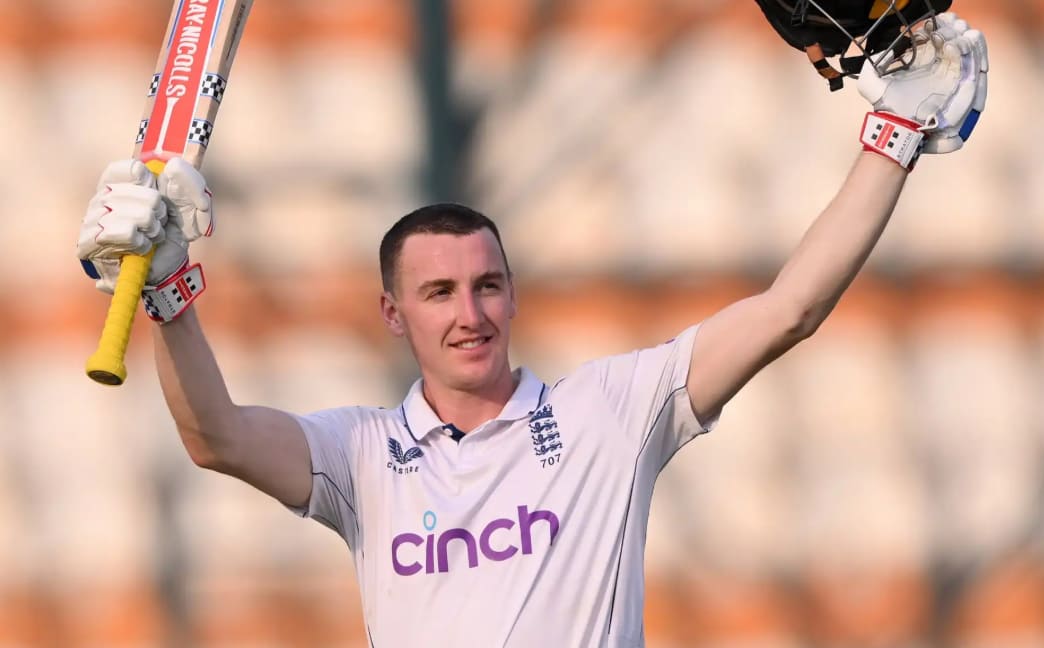
| Harry Brook | England | Pakistan | 317 | 2024 | Multan |
| Wiaan Mulder | South Africa | Zimbabwe | 367* | 2025 | Bulawayo |
Indian Players Who’ve Reached 300
India’s contribution to the triple century club reflects the nation’s batting depth. Three Indian batters have scored Test triple centuries:
- Virender Sehwag – Two triple centuries (309 vs Pakistan in 2004, 319 vs South Africa in 2008)
- Karun Nair – 303* vs England in 2016
- Sanath Jayasuriya – Though he represented Sri Lanka, his 340 against India in 1997 remains a significant milestone
Sehwag’s achievements are particularly noteworthy.
He’s the only Indian with multiple triple centuries in Test cricket, and his aggressive approach redefined how openers could dominate in the longest format.
His 319 against South Africa came off just 278 balls—still the fastest triple century in Test history.
The Fastest and the Slowest
Speed matters differently in Test cricket than in limited-overs formats, but Sehwag’s 278-ball triple century against South Africa stands apart.
Reaching 300 in under 280 deliveries while maintaining the concentration required for such a long innings showcases a rare combination of aggression and control.
On the other end, some triple centuries have been monuments to patience rather than power.
The timeless Tests of cricket’s early era allowed batters to occupy the crease for days, building scores that would be impossible under modern time constraints.
Triple Centuries Beyond Tests: The ODI Contrast
While Test triple centuries remain exceedingly rare, the ODI format has never witnessed one.
The format’s 50-over limit caps individual scores, with the highest ODI innings being 264 by Rohit Sharma.
The structural difference explains why a triple century in cricket’s longest format carries such weight—it requires an entire match’s worth of overs dedicated to a single partnership or innings.
This scarcity makes every Test triple century a genuine event.
When a batter reaches 250, stadiums buzz with anticipation.
The crowd knows they’re watching something that might not happen again for years.
Expert Insight: What Makes a Triple Century Possible
Former England captain Mike Atherton once observed that triple centuries need three things to align: a flat pitch, a weakened attack, and a batter in supreme touch entering the series with confidence already built.
You rarely get all three together, which explains the rarity.
But there’s a fourth element—the mental game. Around the 200-mark, fatigue sets in.
The bowlers are tired too, but they rotate.
The batter doesn’t. Maintaining focus when your legs are heavy and the milestone is still 100 runs away separates those who reach 300 from those who fall short in the 270s or 280s.
Consider Karun Nair’s unbeaten 303 against England in 2016.
Playing in Chennai, he became the first Indian to score a triple century in his third Test match.
He’d scored 4 and 13 in his previous two matches in the series.
The psychological shift from struggling to find form to occupying the crease for an entire day speaks to cricket’s unpredictability.
Second-Innings Triple Centuries: Breaking the Pattern
Most triple centuries come in the first innings when pitches are freshest, and bowlers haven’t yet made their mark. But two batters bucked this trend:
- Hanif Mohammad (337 vs West Indies, 1958): Batting in the second innings to save a Test, Hanif’s marathon knock lasted over 16 hours—one of the longest innings in Test history.
- Brendon McCullum (302 vs India, 2014): New Zealand’s captain led from the front in Wellington, his unbeaten 302 coming in the second innings of his final home Test.
These innings required different mental preparation. Instead of setting a foundation, these batters were responding to pressure, building scores knowing the opposition had already declared their hand.
The Last Triple Century in Test Cricket
South Africa’s Wiaan Mulder became the most recent member of this exclusive club in 2025, scoring an unbeaten 367 against Zimbabwe in Bulawayo.
His innings included 41 boundaries and 3 sixes, reaching the 300-mark in just 297 deliveries.
Mulder’s knock made him South Africa’s second triple centurion after Hashim Amla, who scored 311* against England in 2012.
The 13-year gap between South African triple centuries highlights how rare these performances remain, even for top batting nations.
Frequently Asked Questions
- Who scored the first triple century in Test cricket?
Andy Sandham of England scored the first Test triple century in 1930, making 325 runs against the West Indies in Kingston, Jamaica. It was also his final Test match.
- Which player has the most triple centuries in Test cricket?
Four players share this record with two triple centuries each: Don Bradman, Brian Lara, Virender Sehwag, and Chris Gayle.
- Has anyone scored a triple century in ODI cricket?
No. The highest individual score in ODI cricket is 264 by Rohit Sharma. The 50-over format makes a triple century mathematically improbable.
- What is the fastest triple century in Test cricket?
Virender Sehwag holds this record, reaching 300 off 278 balls against South Africa in Chennai in 2008.
- How many Indian batsmen have scored triple centuries in Test cricket?
Two Indians have scored Test triple centuries: Virender Sehwag (who did it twice) and Karun Nair (once).
Why Triple Centuries Still Matter?
In an era where Test cricket competes with franchise leagues and shorter formats, triple centuries remind us why the five-day game endures.
They’re not manufactured in powerplays or calculated in death overs.
They unfold across sessions, building narrative tension that no other format can match.
When a batter reaches 300, they’ve essentially played three separate centuries without getting out—a feat that tests every dimension of batting.
The technical adjustments needed as the ball ages, the concentration required through tea breaks and drinks intervals, and the physical stamina to keep running between wickets all compound into something greater than the sum of its runs.
These 33 innings across nearly a century of Test cricket stand as monuments to individual brilliance.
Whether it’s Lara’s unbeaten 400, Sehwag’s explosive 319, or Brook’s recent 317, each triple century adds another chapter to cricket’s richest format.
And given their rarity—averaging roughly one every four years—every new addition feels like witnessing history being written in real time.
Also Check:
About the Author
