Cricket websites, apps, fantasy platforms and digital publishers are starting to explore AI-generated match summaries, smart score explanations, player insights, automated recaps and personalized notifications.
At first glance, it may seem as if AI reduces the need for structured sports data. If an AI tool can write a match summary or answer a fan question, why does the platform still need a reliable data feed?
In reality, the opposite is true. AI is increasing the demand for accurate cricket APIs because AI features are only useful when they are grounded in trustworthy match data.
A smart cricket experience still needs live scores, fixtures, scorecards, player stats, innings context, wickets, overs, match status and result information.
How AI Is Increasing the Demand for Reliable Cricket APIs?
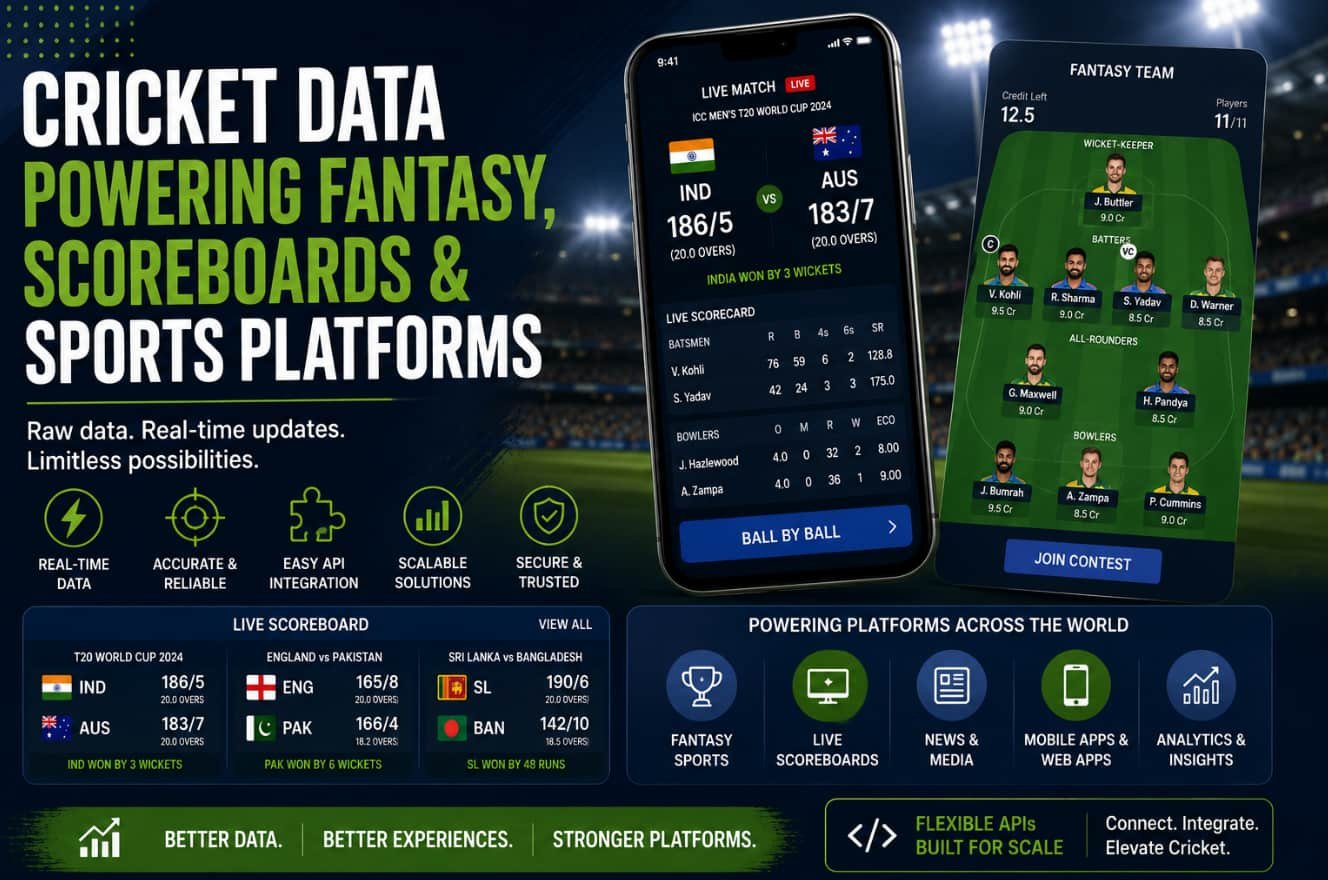
The difference is that AI can turn that data into easier explanations for fans. A platform using a reliable Cricket API is better positioned to build AI features that are useful, accurate and scalable.
AI Does Not Replace Cricket Data
AI can write fluent text, but it does not automatically know the live state of a match. It cannot reliably know who is batting, how many overs are left, whether rain has changed the target or whether a wicket has just fallen unless that information is provided from a trusted data source.
This is an important point for anyone building cricket products. AI is not a replacement for a cricket data layer. It is a layer that sits on top of the data. The better the data, the better the AI output can be.
A weak data layer creates weak AI. If the score is outdated, the summary will be outdated. If the match status is missing, the AI may describe a rain delay as normal play. If the player data is inconsistent, the AI may confuse performances or produce generic insights.
“Cricket is a game of glorious uncertainties.”
— famous cricket saying
That uncertainty is exactly why AI needs reliable data. Cricket changes quickly, and any AI feature must understand the latest match situation before trying to explain it.
Why Cricket Is Especially Data-Hungry for AI?
Cricket is one of the most detailed sports for data. A single match includes innings, overs, deliveries, batting cards, bowling figures, partnerships, extras, wickets, formats, venues, toss decisions, weather interruptions and result conditions. AI can make this information easier to understand, but only if it receives the right inputs.
A simple football-style scoreline is not enough. Cricket requires context. A team score of 160/6 can mean different things depending on format, pitch, target, overs remaining and match stage. A batter’s 40 runs can be match-winning in one situation and too slow in another. A bowler’s economy rate may matter more than wickets in a tight chase.
AI tools need these details to produce meaningful cricket content. Without them, they risk creating surface-level summaries that sound polished but do not actually help fans understand the game.
AI Match Summaries Need Structured Scorecards
One of the clearest AI use cases in cricket is the match summary. A platform may want to generate a short recap after each innings, a final result article, a social media summary or a quick explanation for casual fans.
To do this well, the AI needs structured scorecard data. It needs to know who scored runs, how quickly they scored, who took wickets, when wickets fell, how partnerships developed and what the match result means.
A good AI summary might explain that a team recovered from early wickets because of a middle-order partnership, or that a bowler changed the game with two wickets in one over. That kind of summary is only possible when the data layer provides more than the final score.
For teams planning AI-driven cricket products, reviewing the available Cricket API documentation can help clarify which data fields are needed for summaries, match centres, player pages and automated content workflows.
Smart Fan Questions Need Reliable Answers
Another major AI opportunity is smart search or question answering. Instead of browsing several tabs, a fan might ask: “Who is winning right now?” “Why did the target change?” “Who has taken the most wickets?” “What does this result mean for the table?” or “How many runs are needed from the last five overs?”
These questions sound simple, but they require accurate data. The system must know the current innings, match format, score, target, overs, wickets, player figures and match status. If the match has been reduced by rain, the system must know the revised conditions.
This is why AI increases the need for structured cricket APIs. The AI layer can convert a fan’s question into a readable answer, but it still needs the underlying cricket facts to be correct.
Personalized Updates Depend on Clean Data
AI also makes personalized cricket experiences more realistic. Fans may want updates for favourite teams, favourite players, close finishes, milestones or fantasy-relevant events. Instead of sending every update to every user, platforms can use AI and structured data to create more relevant notifications.
For example, one fan may want alerts only when a favourite batter reaches fifty. Another may want wicket alerts in a specific match. A fantasy player may care about catches, economy rate and strike rate. A casual fan may prefer simple summaries at innings breaks.
This kind of personalization requires clean player, team, match and event data. If the data is inconsistent, personalization becomes unreliable. A notification sent to the wrong users or based on the wrong match event can damage trust quickly.
AI Can Help Casual Fans Understand Cricket
Cricket can be difficult for new or casual fans. Terms such as required run rate, DLS, powerplay, economy rate, follow-on and net run rate can be confusing. AI can help by translating cricket data into simpler explanations.
A casual fan might not immediately understand why 38 runs from 24 balls with six wickets in hand is manageable, or why a wicket at the start of the 18th over matters so much. AI can explain these situations in plain language.
But again, the explanation depends on the data. The AI must know the format, innings state, wickets, overs, target and recent scoring pattern. Without reliable inputs, simple explanations can become misleading.
AI Raises Expectations for Accuracy
Traditional score pages can sometimes hide weak data. A user may see a score and move on. AI features make errors more visible because they turn data into sentences. If the underlying information is wrong, the mistake becomes more obvious.
For example, an outdated score might be displayed quietly on a page. But an AI summary based on that score may confidently explain a match situation that is no longer true. A missing match status may cause AI to generate a final recap before the match has actually ended.
This is why reliability matters so much. AI can make cricket coverage more useful, but it also makes data quality more important than ever.
Cricket APIs Will Power the Next Generation of Sports Content
The next generation of cricket content will likely combine live data, editorial judgment and AI assistance. Websites may generate automatic innings summaries. Apps may explain key turning points. Fantasy platforms may offer player performance insights. Match centres may answer fan questions directly.
None of this works well without a strong cricket data layer. APIs provide the structured information that AI systems need to produce useful outputs. They connect the match to the scorecard, the scorecard to player stats, and player stats to fan-facing explanations.
In practical terms, AI is not making cricket APIs less important. It is making them more central to sports product development.
What Platforms Should Look For?
Platforms planning AI-powered cricket features should look carefully at the quality and structure of their data source. The key question is not only whether the API returns scores. It is whether the API supports the context needed for intelligent experiences.
Important data areas include:
- Live scores and innings state
- Ball-by-ball or recent event data
- Scorecards and player statistics
- Fixtures and match status
- Teams, squads and player identities
- Match format and venue details
- Rain delays, revised targets and result types
- Historical records for player and team context
These data points give AI enough grounding to produce meaningful summaries, answers and insights.
Final Thoughts
AI is increasing the demand for reliable cricket APIs because smarter sports experiences need better data underneath. Match summaries, smart search, personalized notifications and fan-friendly explanations all depend on structured cricket information.
Cricket is too detailed and too changeable for AI to work from vague or incomplete inputs. The sport needs live scores, scorecards, player stats, match status, revised conditions and historical context. AI can make that information easier to understand, but it cannot replace the need for accurate data.
The future of cricket coverage will belong to platforms that combine reliable APIs with intelligent presentation. Clean data will power smarter summaries, better fan experiences and more useful digital cricket products.
About the Author
