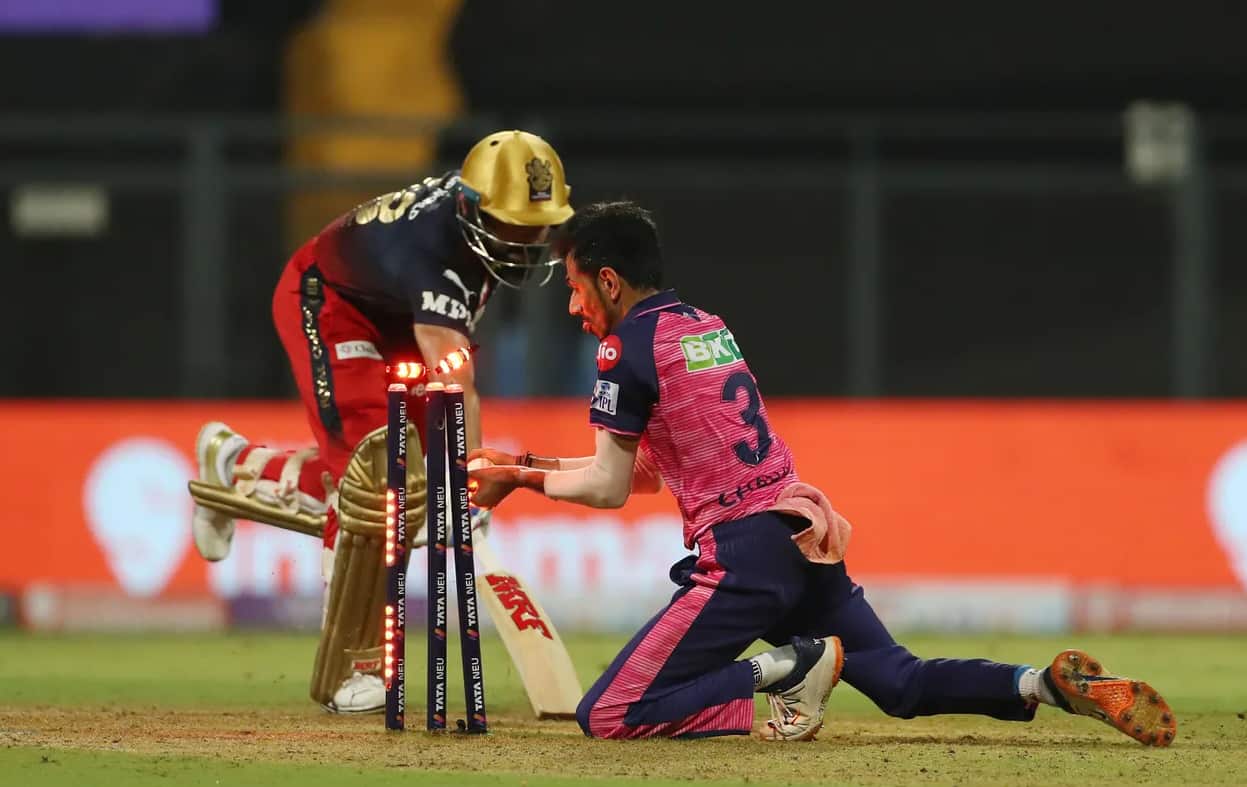
Every time a batter gets bowled or run out in the IPL, you see a flash of light.
Those glowing stumps are not just for show. They carry sensors, microprocessors, batteries, and cameras.
And they cost more than most people expect.
Cost of IPL Stumps
A full LED stump set used in the IPL can cost anywhere from ₹8 lakh to ₹35 lakh.
That’s for three stumps and two bails.
What Are IPL LED Stumps?
These are not the simple wooden poles used in school or club cricket.
IPL stumps are made from strong composite plastic.
The bails on top contain tiny microprocessors, LED lights, and a power source.
When a bail is dislodged, even by a fraction, the system detects it in about 1/1000th of a second.
The bails light up instantly, and the stumps glow too.
This tech is important. It helps the third umpire confirm the exact moment a wicket fell.
That matters a lot in tight run-outs and stumpings.
Who Made These Stumps?
LED stumps were invented by Bronte EcKermann, a former Australian grade cricketer and engineer.
He co-founded Zing International, the company behind the Zing LED stumps used in major tournaments worldwide.
The idea reportedly came from a simple toy his daughter had.
From that, cricket got one of its most recognizable tech upgrades.
When Did LED Stumps Enter the IPL?
| Year | Event |
|---|---|
| 2013 | First used in the Big Bash League (BBL), Australia |
| 2014 | Adopted by ICC for the T20 World Cup in Bangladesh |
| Post-2014 | Became standard in IPL, major ICC events, and franchise leagues worldwide |
Once broadcasters and fans saw the visual impact on TV, widespread adoption was quick.
IPL Stump Price in India: Full Breakdown
| Item | Approx. Price (INR) | Notes |
|---|---|---|
| Full Zing LED stump set (3 stumps + 2 bails) | ₹30–35 lakh | High-end system with sensors, electronics, base unit |
| Full tournament-level package (multi-set) | ₹32–41 lakh | Includes cameras, backup sets, full electronics |
| Alternate brand LED stump set | ₹8–20 lakh | Lower-end or non-Zing systems |
| Single LED stump (individual) | ₹8–10 lakh | Per stump estimate, varies by brand |
| One pair of Zing LED bails | ₹40,000–50,000 | Bails only, without stumps |
So when Arshdeep Singh shattered a middle stump in IPL 2023, fans joked he’d smashed the equivalent of five iPhone 14 Pro Max phones in one delivery. They weren’t far off.
Why Are IPL LED Stumps So Expensive?
The price is high because the technology packed inside is serious.
- 1. Sensors and Microprocessors
The bails contain microprocessors that detect movement in less than a millisecond. This level of precision is what makes DRS decisions cleaner and less controversial.
- 2. Strong Materials
Composite plastic stumps must survive 150 km/h deliveries, diving keeper gloves, and constant use across a 70+ match season. Standard wood just wouldn’t hold up.
- 3. Built-In Electronics
High-end sets include LED strips inside the stumps, low-voltage batteries in the bails, and in some versions, stump cameras and microphones too. Fitting all of that into three slim poles is genuinely difficult to engineer.
- 4. Integration with DRS
LED stumps sync with systems like UltraEdge and Hawk-Eye. The timing of the light flash helps match the exact moment of bail movement against ball position. That integration costs money on both the hardware and software side.
- 5. Maintenance and Logistics
Each ground needs multiple sets per match, plus backup sets in case of damage. After every match, the systems need checking, calibration, and sometimes part replacements. Trained staff handles this throughout the season.
Does BCCI Buy or Rent These Stumps?
BCCI does not typically buy the stumps outright.
Instead, the board signs contracts with companies like Zing International to lease the systems for IPL seasons and home bilateral series.
The supplier handles all technical support, maintenance, and part replacements.
The total cost across a full IPL season, covering 70+ matches at multiple venues, runs into several crores of rupees.
How Many Sets Are Used in an IPL Season?
Each match needs at least two full LED wicket sets, including reserve sets.
With 70+ matches across multiple venues, the total number of sets in play is significant.
When you multiply the per-set cost by that volume, the investment adds up fast.
Is the Cost Worth It for IPL?
Yes, and for three clear reasons.
- Accuracy — Fewer contested run-out and stumping decisions. The third umpire gets a clear, frame-by-frame view of when the bail lifted. In a league where one decision can shift a match and crores in prize money, that matters.
- Broadcast value — The light flash looks spectacular in slow motion. Broadcasters get cinematic stump-break visuals. Sponsors get a tech-heavy product that holds viewer attention.
- Brand image — IPL wants to be the best T20 league in the world. LED stumps match that positioning. They’re part of what separates IPL production from a regular domestic match.
Summary: IPL Stump Cost Facts
- Full Zing LED stump set: ₹30–35 lakh
- Tournament-level package: ₹32–41 lakh
- Single LED stump: ₹8–10 lakh
- One pair of LED bails: ₹40,000–50,000
- Inventor: Bronte EcKermann (Zing International)
- First major use: BBL 2013, then ICC events and IPL
- BCCI approach: Leases systems, does not buy outright
Frequently Asked Questions
- Q: What is the price of one full IPL LED stump set?
A full LED set (three stumps, two bails, electronics) typically costs between ₹8 lakh and ₹35 lakh. High-end Zing systems used in major leagues sit closer to the ₹30–35 lakh mark.
- Q: How much does one single LED stump cost?
One stump is estimated at around ₹8–10 lakh. That’s the equivalent of several premium smartphones or a good motorcycle.
- Q: How much do the LED bails cost?
A pair of Zing LED bails costs approximately ₹40,000–50,000. The bails hold the microprocessors, batteries, and sensors that trigger the lights.
- Q: Does BCCI buy or lease the LED stumps?
BCCI leases the systems. The supplier manages maintenance, repairs, and replacements across the season.
- Q: Why are IPL LED stumps so expensive?
Because they contain advanced sensors, microprocessors, LEDs, batteries, and in some versions cameras and microphones. All of it is packed into slim composite stumps that must survive a full IPL season. Design, engineering, testing, and upkeep all add to the cost.
Also Check:
About the Author
