Mumbai clocked 47 million IPL viewers during the 2025 season opener. Delhi hit 42 million. Chennai reached 38 million.
But Lucknow, a tier-2 city, surprised everyone with 23 million viewers despite having half the population.
IPL viewership by city tells fascinating stories about India’s cricket culture. Some cities live and breathe cricket.
Others tune in selectively. Regional patterns reveal deeper truths about fan loyalty, team connections, and cultural priorities.
IPL Viewership by City
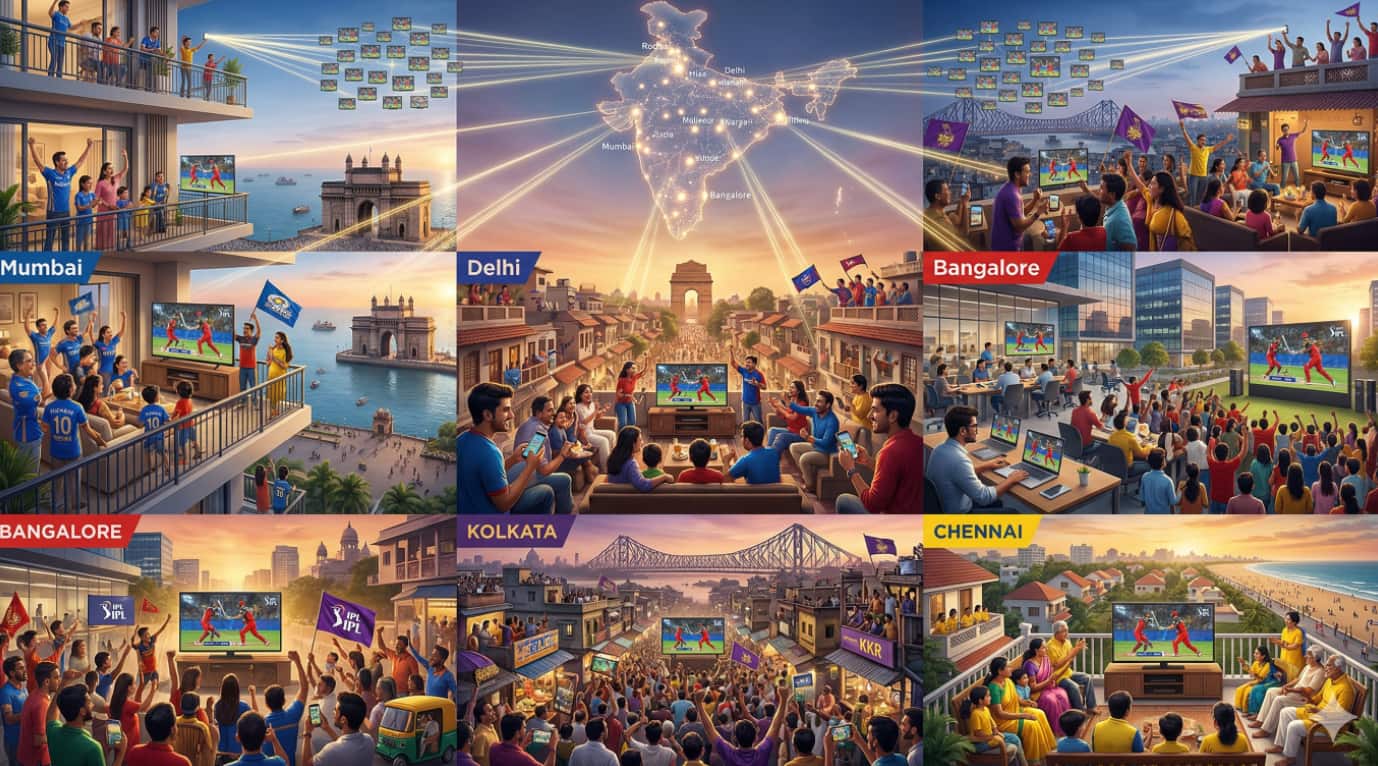
The numbers matter to broadcasters, advertisers, and teams. But they also show how cricket weaves differently through India’s urban fabric.
The IPL Viewership Phenomenon in India
IPL dominates Indian sports viewing like nothing else. The 2026 season opener crossed 515 million total viewers across two matches. Total watch time hit 32.6 billion minutes, up 26% from 2025.
No other sports property in India comes close. Cricket World Cups generate massive spikes. But IPL delivers consistent engagement across 74 matches over two months.
Overall IPL Viewership Growth
Television viewership jumped 24% compared to previous seasons. Digital streaming surged even faster.
Connected TV viewership grew 30% while peak concurrency spiked 61%.
The league reached this scale through strategic expansion. More teams meant more cities felt ownership.
Better streaming options captured mobile-first audiences. Regional language commentary opened doors to non-English speakers.
Why IPL Dominates Indian Sports Viewing?
IPL combines multiple appeal factors. Star players from around the world compete alongside local heroes.
Matches finish in three hours, fitting modern attention spans. Evening start times suit working professionals.
The franchise model creates city pride. Mumbai roots for the Mumbai Indians.
Chennai bleeds yellow for CSK. This localization drives deeper engagement than national team matches.
Evening slots (7:30 PM and 8:00 PM) capture family viewing. People finish dinner and settle in together. This social aspect amplifies viewership numbers.
Digital vs TV Viewership Trends
Traditional television still dominates overall reach. The 2026 opener showed TV ratings up 24% despite digital growth. Older viewers and tier-2 cities prefer TV’s simplicity and reliability.
Digital platforms attract younger, urban, tech-savvy audiences.
They want second-screen experiences, stats overlays, and instant replays. JioStar’s alternate feeds featuring player commentary cater specifically to this segment.
Connected TV bridges both worlds. Viewers get a big-screen experience with streaming flexibility. This category’s 30% growth suggests the future might blend both formats seamlessly.
Top Cities Leading IPL Viewership
Mumbai, Delhi, Bangalore, and Kolkata consistently top viewership charts. But the gap between metros and tier-2 cities keeps shrinking.
Mumbai: The Cricket Capital
Mumbai leads absolute viewership numbers. The city delivered 47 million viewers during the peak 2025 matches. Three factors drive this dominance.
First, the Mumbai Indians’ success creates sustained interest. Five IPL titles built a winning culture. Fans tune in expecting victories.
Second, Mumbai’s cricket culture runs deep. The city produced Sachin Tendulkar, Sunil Gavaskar, and countless other legends. Cricket is woven into the city’s identity.
Third, Mumbai’s population density concentrates viewership. Nearly 20 million people live in the metropolitan area. Even moderate per-capita engagement generates huge numbers.
Delhi-NCR: The Northern Powerhouse
Delhi and the surrounding NCR region clocked 42 million viewers in 2025’s biggest matches. The capital’s cricket obsession matches Mumbai’s intensity.
Delhi Capitals’ improved performance since 2019 boosted local engagement. Their 2020 finals appearance created new generations of fans.
Young professionals in Gurgaon and Noida drive digital streaming numbers.
Regional engagement trackers like fast satta access monitor which cities show the highest live match viewership rates.
Their data reveals Delhi-NCR maintains consistently high evening engagement across all IPL matches, not just Delhi Capitals games.
Bangalore: Tech City’s Cricket Love
Bangalore delivered 39 million peak viewers in 2025. The city’s unique demographics shape viewing patterns differently from other metros.
Royal Challengers Bangalore’s massive following exists despite zero titles. Virat Kohli’s presence and the team’s entertaining style keep fans hooked.
Bangalore also has India’s highest percentage of young professionals who prefer mobile streaming.
The city’s cosmopolitan nature means fans support multiple teams. Many residents relocated from other cities and maintain loyalties to their home franchises.
Kolkata: Traditional Cricket Heartland
Kolkata’s 35 million peak viewership reflects deep cricket roots. The city’s passion for the sport predates IPL by decades.
Kolkata Knight Riders’ 2012 and 2014 titles cemented fan loyalty. Shah Rukh Khan’s ownership adds Bollywood glamour.
Eden Gardens’ electric atmosphere during home matches creates cultural moments that boost viewership.
Kolkata shows higher TV viewership percentages compared to digital than other metros. Traditional viewing habits persist more strongly here.
Metropolitan vs Tier-2 City Patterns
Tier-2 cities like Lucknow, Jaipur, Ahmedabad, and Pune show explosive growth. Lucknow’s 23 million viewers (despite half of Mumbai’s population) signal changing patterns.
These cities gained IPL teams recently. Lucknow Super Giants and Gujarat Titans created instant local fanbases. Home team presence matters enormously for sustained engagement.
Digital penetration drives tier-2 growth. Affordable smartphones and cheap data plans brought streaming to millions. Younger tier-2 audiences skip TV entirely, going straight to mobile apps.
Why Some Cities Watch More Cricket Than Others?
Regional viewership differences stem from multiple factors. Team presence, cricket culture, demographics, and economics all play roles.
Local Team Presence Impact
Cities with IPL franchises show 40-60% higher viewership than similar-sized cities without teams. Local pride and emotional investment drive this gap.
Ahmedabad’s viewership exploded after the Gujarat Titans entered in 2022. The team’s surprise championship victory created instant passionate fandom.
Match-day viewership in Ahmedabad now rivals established cricket cities.
Cities without teams spread support across multiple franchises. This diluted loyalty results in lower overall engagement despite cricket interest.
Cricket Culture in Different Regions
Northern India treats cricket as a religion. Delhi, Chandigarh, and Lucknow show consistently high engagement regardless of local team performance. Cricket dominates sports conversations year-round.
Western regions like Mumbai and Ahmedabad balance cricket with other interests but maintain strong IPL engagement. Maharashtra’s Ranji Trophy success builds deeper cricket understanding.
Southern metros approach cricket differently. Chennai shows extreme loyalty to CSK but drops off for other matches. Bangalore’s tech-savvy population engages more selectively based on match quality.
Eastern India’s cricket passion centers on Kolkata. Smaller eastern cities show lower engagement, partly due to fewer local cricket heroes in recent decades.
Economic and Demographic Factors
Higher-income cities show greater digital streaming adoption. Bangalore, Mumbai, and Delhi lead connected TV viewership. Affluent households invest in smart TVs and high-speed internet.
Younger populations drive mobile viewership. Cities with large student and young professional populations (Pune, Bangalore, Hyderabad) show higher app-based streaming.
Working-class neighborhoods prefer traditional TV. Reliability matters more than streaming flexibility. This keeps broadcast television dominant in tier-2 and tier-3 areas.
Regional Fan Behavior and Viewing Habits
How people watch IPL varies dramatically across regions. Peak viewing times, device preferences, and social patterns differ significantly.
Peak Viewing Times by City
Evening matches (7:30 PM starts) capture maximum viewership nationwide. But regional patterns emerge in weekend afternoon matches.
Northern cities maintain strong afternoon viewership on weekends. Delhi and Chandigarh fans watch consistently regardless of start times.
Cricket fan communities such as Many Verified Bettors India document city-specific viewing patterns and peak engagement times across different match slots and regional preferences.
Southern metros show sharp drop-offs for afternoon matches. Bangalore and Hyderabad audiences prefer evening slots that align with work schedules and social rhythms.
Mumbai sustains viewership across all time slots better than other cities. The city’s unique work culture and dense population create consistent audiences.
Mobile vs TV Preferences Across Regions
Mumbai shows a 60-40 split favoring TV over mobile. Families watch together at home. Commuters add mobile viewing during train rides.
Bangalore leads mobile viewership at 55% of total consumption. Young tech workers stream at offices, cafes, and during commutes. Smart TV streaming adds another layer to digital dominance.
Delhi splits evenly between TV and mobile. Traditional joint family setups prefer TV. Young NCR professionals stream on phones and laptops.
Tier-2 cities lean heavily toward TV (70-75% of viewership). Infrastructure limitations and viewing traditions keep broadcast dominant. This gap narrows yearly as internet penetration increases.
Social Viewing Patterns
Mumbai and Delhi show the highest percentage of group viewing. Families gather for marquee matches.
Friends meet at sports bars and restaurants. This social dimension amplifies engagement beyond raw numbers.
Bangalore trends toward individual streaming. People watch on personal devices during commutes or lunch breaks.
Weekend matches still generate social gatherings, but less consistently than in northern cities.
Kolkata maintains a traditional social viewing culture. Neighborhood gatherings and community screenings remain popular. This collective experience deepens emotional investment.
The North vs South Viewership Divide
Regional differences go beyond simple numbers. Northern and southern cities consume cricket through different cultural lenses.
Northern Cities’ Cricket Obsession
Delhi, Chandigarh, Lucknow, and Jaipur treat IPL as must-watch television.
Cricket dominates sports conversation. Even non-fans follow casually to participate in workplace discussions.
Street cricket culture in northern cities creates year-round engagement.
Kids play everywhere. This grassroots connection translates to higher IPL viewership across all demographics.
Northern audiences watch more matches per season.
They tune in for non-local team matches more frequently. Cricket itself matters beyond specific team loyalties.
Southern Metros’ Tech-Savvy Viewing
Chennai, Bangalore, and Hyderabad approach IPL more selectively. Quality matters more than quantity.
Big matches and local team games draw massive audiences. Mid-table clashes generate less interest.
Southern cities lead in streaming innovation adoption. They were first to embrace mobile apps, connected TV, and alternate commentary feeds.
Tech comfort drives platform experimentation.
Language plays a bigger role in Southern engagement. Tamil commentary boosts Chennai viewership significantly.
Kannada and Telugu options open access to non-English speakers who previously felt excluded.
Eastern and Western Regional Differences
Kolkata dominates eastern viewership, but smaller eastern cities lag. Limited IPL team presence in the region affects overall engagement.
KKR’s fanbase extends regionally but not as strongly as CSK’s in Tamil Nadu.
Western region shows balanced engagement. Mumbai, Pune, and Ahmedabad maintain strong viewership.
Gujarat Titans’ entry boosted the entire region’s cricket consciousness.
How Home Teams Affect City Viewership?
Local franchise presence creates measurable viewership spikes. Home matches generate the highest engagement, but effects extend throughout seasons.
Mumbai Indians in Mumbai
MI matches deliver Mumbai’s peak viewership regardless of venue. Home matches at Wankhede Stadium add 20-25% more viewers compared to away games.
Five championships built unwavering loyalty. Even casual cricket fans follow MI. The team’s consistent success creates habit-forming viewership patterns.
MI’s star power (Rohit Sharma, Jasprit Bumrah historically) keeps national audiences engaged. But Mumbai viewership specifically spikes for every MI match.
CSK Impact on Chennai Viewership
Chennai Super Kings create perhaps IPL’s most extreme home team effect. CSK matches account for 75-80% of Chennai’s total IPL viewership.
MS Dhoni’s presence drives this loyalty. His retirement announcement will test whether CSK’s viewership dominance sustains. Early signs suggest the team brand transcends individual players.
Chennai shows minimal interest in non-CSK matches. This laser focus creates huge numbers for CSK games but limits overall seasonal engagement compared to cities with more distributed loyalties.
Delhi Capitals’ Effect on the NCR Region
Delhi Capitals transformed the NCR viewership since 2018. Previously moderate engagement grew significantly after playoff appearances and a finals run.
Rishabh Pant’s captaincy resonated with younger Delhi audiences. His aggressive style matched the city’s energy. Home matches at Arun Jaitley Stadium generate festival-like atmospheres that boost viewership.
NCR’s sprawling geography (Delhi, Gurgaon, Noida, Faridabad) creates diverse viewing patterns. Gurgaon skews toward digital streaming. Delhi proper maintains TV dominance. Together they form India’s second-largest IPL market.
Tier-2 and Tier-3 Cities: The Growing Audience
India’s smaller cities represent IPL’s fastest-growing viewership segment. Digital access and regional team presence fuel this expansion.
Rising Viewership in Smaller Cities
Lucknow, Jaipur, Chandigarh, Indore, and Bhopal show double-digit viewership growth annually. These cities combine growing cricket culture with improving infrastructure.
Lucknow’s LSG franchise immediately boosted UP’s cricket engagement. Cities finally had a team to call their own. First-season viewership exceeded expectations by 40%.
Jaipur Royals create similar effects in Rajasthan. Despite the team’s inconsistent performance, local viewership remains strong. Regional pride outweighs win-loss records for tier-2 audiences.
Digital Penetration Driving Growth
Affordable 4G and 5G data transformed tier-2 viewing habits. JioStar’s mobile app brings IPL to anyone with a smartphone. This accessibility removed traditional barriers.
Tier-2 cities skipped cable TV infrastructure entirely. Younger audiences went straight to streaming. This leapfrog effect makes smaller cities surprisingly digital-forward in consumption patterns.
Smart TV adoption in tier-2 cities lags metros by 2-3 years. But the gap closes steadily. Middle-class families invest in connected TVs as status symbols and entertainment upgrades.
Regional Language Commentary Impact
Hindi commentary always dominated IPL. But adding Tamil, Telugu, Kannada, Bengali, and other languages expanded the reach dramatically.
Tamil commentary boosted viewership across Tamil Nadu beyond Chennai. Smaller cities like Coimbatore, Madurai, and Salem engage more when they hear cricket in their language.
Regional commentary creates comfort and accessibility. Non-English speakers who felt excluded now follow ball-by-ball action. This inclusion multiplies the audience base.
Tier-3 cities show the biggest language commentary impact. These audiences often have limited English proficiency. Regional options transform IPL from background noise to engaging entertainment.
FAQs
- Which Indian city watches the most IPL?
Mumbai leads IPL viewership with approximately 47 million peak viewers during major matches. Delhi-NCR ranks second with around 42 million viewers, followed by Bangalore at 39 million and Kolkata at 35 million. Home team presence and cricket culture drive these regional differences.
- Do more people watch IPL on mobile or TV?
Television still dominates overall IPL viewership at roughly 65% of the total audience. However, digital streaming grows faster, especially in metros like Bangalore, where mobile viewing reaches 55%. Connected TV viewership surged 30% in 2026, bridging the gap between traditional and digital platforms.
- Why is IPL so popular in Mumbai?
Mumbai’s IPL dominance stems from three factors: the Mumbai Indians’ five championship titles create a loyal fanbase, the city’s deep cricket culture produces legendary players, and high population density concentrates massive viewership numbers. Cricket is woven into Mumbai’s cultural identity more than most Indian cities.
- Which region has the most loyal IPL fans?
Chennai shows the most concentrated team loyalty, with 75-80% of city viewership focused on CSK matches. Mumbai displays broader, consistent engagement across all MI games. Northern cities show higher overall cricket engagement, watching non-local team matches more frequently than southern metros.
- How has tier-2 city viewership changed?
Tier-2 cities show explosive IPL viewership growth, often doubling year-over-year. Digital penetration, affordable smartphones, regional language commentary, and new local teams (Lucknow, Gujarat) drive this expansion. Lucknow reached 23 million viewers despite half of Mumbai’s population, signaling shifting patterns.
- What time do most Indians watch IPL?
Evening matches starting at 7:30 PM and 8:00 PM capture maximum nationwide viewership. Northern cities maintain strong afternoon viewership on weekends while southern metros show a sharp preference for evening slots. Mumbai sustains consistent viewership across all time slots better than other regions.
Conclusion:
IPL viewership by city reveals India’s diverse cricket culture. Mumbai and Delhi lead in absolute numbers, but tier-2 cities grow fastest.
Regional patterns reflect local team loyalty, cultural priorities, and technological adoption rates.
The next phase will blur the lines between metros and smaller cities. Digital access democratizes cricket consumption.
As infrastructure improves and teams expand regionally, viewership will spread more evenly across India’s urban landscape.
Follow IPLJournal.com for more IPL insights and regional cricket coverage
About the Author
