Mumbai Indians needed 16 runs off the final over in IPL 2023. Most teams would send their power hitter.
Instead, MI’s data team had studied the bowler’s yorker success rate against left-handers. They sent a lefty who scored 18 runs in six balls.
That’s modern IPL cricket. Data analytics changed how teams pick players, set fields, and make split-second calls.
What once relied on gut feel now runs on numbers, algorithms, and real-time data feeds.
IPL franchises spend millions on analytics departments.
They track everything from ball rotation speed to a batsman’s favorite scoring zones.
The teams that use data best often lift the trophy.
How IPL Teams Use Data Analytics to Win Matches?
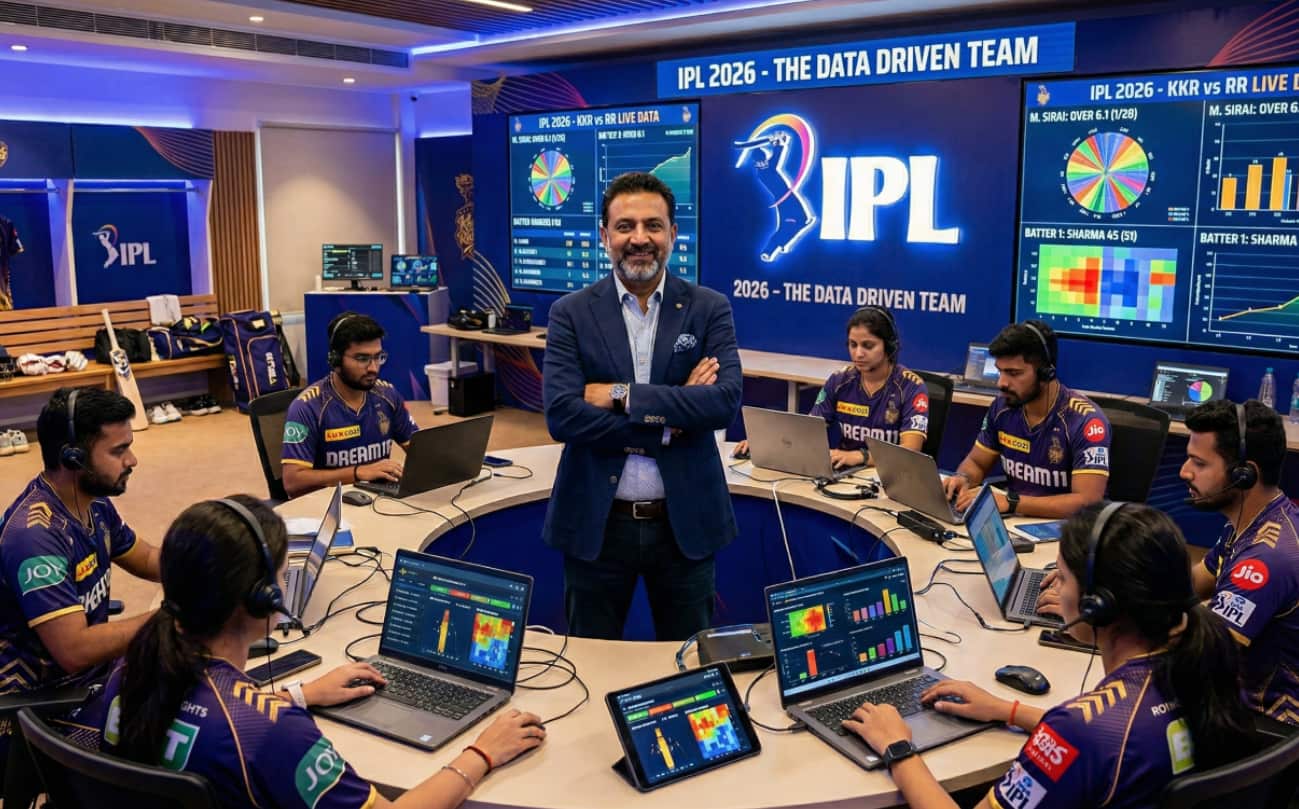
The Analytics Revolution in IPL Cricket
IPL started in 2008 with basic stats like batting average and economy rate. Coaches relied on experience and instinct.
Fast forward to 2025, and every franchise has dedicated data analysts working before, during, and after matches.
The shift happened around 2015 when the Mumbai Indians and the Kolkata Knight Riders hired full-time analysts.
Other teams followed quickly. Now, even smaller franchises invest heavily in ipl data analytics.
Technology drives this change. Ball-tracking cameras capture swing and seam movement.
Wearable devices monitor player fatigue. Video analysis software breaks down every delivery in seconds.
From Gut Instinct to Data-Driven Decisions
Old-school captains made calls based on what felt right. Modern captains get live data feeds on tablets. They see win probability percentages, optimal bowling match-ups, and field placement heat maps.
This doesn’t remove cricket instinct. It sharpens it. Data shows patterns humans miss. A bowler might seem fine, but analytics reveal his pace dropped 3 kph in the last over. Time for a change.
Teams that ignore analytics fall behind. The gap between data-rich and data-poor franchises keeps growing each season.
Player Performance Tracking and Selection
IPL auctions can make or break a season. Smart franchises use ipl team analytics to find value picks while rivals overpay for big names.
Scouts still watch players live. But they now carry laptops loaded with performance databases. Every domestic match, every T20 league, every net session gets logged and analyzed.
Metrics Teams Track
Strike rate and average tell part of the story. Advanced metrics reveal much more:
- Boundary percentage shows how often a batter scores in fours and sixes. High boundary hitters suit T20 cricket better than accumulating players.
- Dot ball percentage matters more in T20s than people think. Batters who rarely get stuck build pressure on bowlers.
- Death over economy separates good bowlers from great ones. Anyone can bowl in the powerplay. Defending 12 runs in the final over requires special skills.
- Match-up data tracks how players perform against specific bowling types. A batter might average 45 overall but struggle against left-arm spin.
Finding Hidden Gems
Big franchises can afford superstars. Smart ones find undervalued players through cricket data analysis.
KKR famously used a “Moneyball” approach in 2012. They bought players that other teams overlooked. Their analysts identified Sunil Narine as an underpriced mystery spinner. He became their most valuable player.
Teams analyze domestic cricket extensively. A player dominating the Ranji Trophy or the Syed Mushtaq Ali Trophy with the right metrics gets flagged. Franchises often grab these players for the base price at auctions.
Role-specific analysis helps too. Not every team needs six power hitters. Analytics identify which specific role each squad lacks. Then scouts find players who excel in that exact role.
Real-Time Match Strategy and Decision Making
Modern IPL teams make hundreds of tactical adjustments during matches. Live data feeds guide many of these calls.
Coaches sit in dugouts with tablets and laptops. Analysts upstairs crunch numbers and send recommendations through headsets. It’s like having a chess computer advising every move.
Live Data During Matches
Teams track dozens of metrics in real time. Ball speed, swing angles, pitch wear patterns, and player fatigue levels. All of it flows into decision-making.
Platforms like real time betting exchange app provide instant performance metrics that teams reference during matches. These systems track ball-by-ball data and generate live probability models.
The captain decides whether to bowl spin or pace based on the current pitch conditions. Data shows exactly how much the ball is gripping. If numbers say spin will struggle, pace comes on.
DRS decisions get data support, too. Hawkeye predictions aren’t perfect, but they’re better than guessing. Teams study their DRS success rates and adjust challenge strategies.
Tactical Adjustments Based on Real-Time Metrics
Impact Player rules changed IPL strategy completely. Teams now substitute players mid-match based on live analysis.
Analytics determine the optimal time to bring in a power hitter or an extra bowler. If data shows the pitch is slowing down, teams might swap a pacer for a spinner at the innings break.
Strategic timeouts give teams two and a half minutes to regroup. Coaches use this time to review real-time data and adjust plans.
They might move fielders based on recent wagon wheels or change bowling plans based on batter weakness data.
Weather monitoring matters more than fans realize. Dew factor predictions help teams decide whether to bat or bowl first. Live humidity readings influence spin vs pace decisions in the second innings.
Pitch and Weather Data Analysis
Every IPL venue plays differently. Wankhede suits pace and bounce. Chepauk turns from ball one. Chinnaswamy is a batting paradise.
Teams maintain detailed venue databases. They know average first innings scores, how pitches behave across different phases, and which player types succeed where.
How Teams Analyze Pitch Conditions?
Pre-match pitch inspection combines old-school assessment with modern data. Curators look at grass coverage and hardness. Data analysts review how similar pitches played in past matches.
Moisture readers measure underground water levels. Pitch hardness devices test surface firmness. All this data feeds into team composition decisions.
Some venues have consistent patterns. Others vary wildly based on weather and preparation. Teams study historical data to predict behavior.
Weather Impact on Strategy
Mumbai heat and humidity affect the ball differently from Bangalore’s pleasant climate. Teams adjust strategies accordingly.
Dew changes matches completely. The ball gets slippery in dewy conditions. Spinners struggle to grip. Batters find timing easier. Teams winning tosses in dew-prone venues almost always bowl first.
Wind direction influences field placements. Strong winds to one boundary mean teams position fielders differently. Bowlers adjust lengths to account for wind drift.
Temperature affects player performance, too. Analytics track fatigue patterns in extreme heat. Teams manage bowling workloads carefully during day matches in hot cities.
Opposition Analysis and Match-Ups
Knowing your opponent wins matches. Modern franchises study rivals obsessively using ipl match strategy databases.
Every opposing player gets a detailed profile. Strengths, weaknesses, preferred shots, bowling angles, field placements, pressure responses. Nothing goes unnoticed.
Studying Opponent Weaknesses
Comprehensive databases such as Laser247 Cricket Betting aggregate historical player statistics that help teams identify patterns. These platforms compile years of performance data across formats and conditions.
Analysts identify which bowlers trouble which batters. A right-hander might destroy pace but struggle against left-arm spin. Teams then ensure they bowl left-arm spin at that batter.
Field placement data reveals scoring zones. If a batter scores 70% of runs square of the wicket, teams plug those gaps. Force them to play unnatural shots.
Death bowling plans get special attention. Teams study which yorker lengths work against which batters. They analyze slower ball success rates. Every percentage point matters when defending 10 runs in the final over.
Player vs Player Match-Up Data
Head-to-head records matter enormously. Some batters own certain bowlers. Others struggle consistently.
If Batter A has scored 50 runs off Bowler B in 20 balls across their careers, that’s crucial intel. The captain might avoid bowling that bowler to that batter.
The same logic applies to dismissals. If Bowler C has dismissed Batter D five times, that’s a golden match-up. Teams create situations to exploit these advantages.
Impact player rules make match-ups even more important. Teams can now bring in specialist players specifically to exploit favorable match-ups.
Historical Performance Against Specific Teams
Some teams consistently beat others. Analysts study why. Is it batting match-ups? Bowling styles? Venue familiarity?
Mumbai Indians dominated the Chennai Super Kings for years. Analysts identified specific reasons. MI’s pace attack exploited CSK’s weakness against short balls. CSK eventually adjusted their strategy and player selection.
Teams track how opponents perform under pressure. Some teams crumble chasing 180-plus. Others thrive in high-pressure games. This intel shapes auction strategies and match plans.
Predictive Modeling and Win Probability
IPL broadcasts show live win probability percentages. Those calculations come from complex predictive models similar to what teams use internally.
Machine learning algorithms process historical match data. They learn which factors predict wins. Then they apply those patterns to current match situations.
How Teams Calculate Win Chances During Matches
Win probability models consider dozens of variables. Current score, wickets lost, overs remaining, required run rate, venue history, team strength, player match-ups.
These models update after every ball. One wicket can swing probability 15%. A boundary in a tight finish shifts numbers dramatically.
Teams use these probabilities to guide decisions. Should they attack or consolidate? When should they take risks? Data provides clarity in chaos.
Machine Learning in Cricket Analytics
Advanced franchises employ data scientists who build custom models. These algorithms learn from every IPL match ever played.
Neural networks identify patterns humans can’t see. They might discover that teams scoring 45 runs in powerplay overs 3-6 win 23% more often. This insight changes powerplay strategies.
Predictive models forecast player performance, too. They can estimate how many runs a batter will score based on recent form, venue, opposition, and conditions.
Data-Driven Bowling and Batting Order Changes
Batting order flexibility wins matches. Analytics help teams identify optimal batting positions for each player.
Some batters excel at number three but struggle opening. Data shows exactly where each player performs best. Teams construct lineups accordingly.
Bowling orders get similar treatment. Which bowler should bowl which over? Data reveals optimal deployment patterns. Some bowlers excel in powerplay. Others thrive in middle overs or death.
Teams even use analytics for field placements. Heat maps show where batters score most often. Fielders position precisely to cut off high-probability scoring zones.
Case Studies: Teams Leading the Analytics Game
Several IPL franchises stand out for how ipl teams use data. These organizations invested early and heavily in analytics infrastructure.
Mumbai Indians’ Analytics Approach
Mumbai Indians set the standard for data-driven cricket. Five IPL titles prove their methods work.
MI hired analysts before most rivals. They built comprehensive databases covering every professional cricket match. Their scouting network feeds data from global T20 leagues.
MI’s auction strategy consistently finds value. They identify players whose skills suit their home ground perfectly. Wankhede’s pace and bounce favor certain player types. MI’s data team knows exactly which types.
During matches, MI coaches get constant data feeds. They adjust field placements multiple times per over based on live probabilities. This micro-optimization adds up over a season.
Kolkata Knight Riders’ Moneyball Strategy
KKR pioneered the cricket version of Moneyball. They hired analysts from baseball and other sports.
Their 2012 and 2014 title wins came from buying undervalued players. While rivals chased big names, KKR’s analysts found hidden gems through advanced metrics.
KKR tracks unconventional stats. They value players who excel in specific situations, even if overall numbers look average.
A batter who consistently scores 30 in 15 balls might get overlooked by others but valued highly by KKR.
Other Successful Data-Driven Franchises
Rajasthan Royals used analytics to win the first IPL in 2008. Their small budget forced creative thinking. They found players that others missed through smart data analysis.
Chennai Super Kings balance analytics with experience. MS Dhoni’s instincts combine with data insights. This hybrid approach won them four titles.
Gujarat Titans shocked everyone by winning in their debut season (2022). Their success came largely from smart data-driven auction picks and optimal team composition.
FAQs
- What data do IPL teams collect during matches?
IPL teams collect ball speed, swing angles, pitch conditions, player movement tracking, shot selection zones, and real-time fatigue indicators. They also monitor weather conditions, dew levels, and opposition patterns. This data feeds into immediate tactical decisions and long-term strategy development.
- How does data analytics help in player auctions?
Analytics identify undervalued players by examining advanced metrics beyond basic averages. Teams analyze role-specific performance, venue suitability, and match-up advantages. This approach helps franchises avoid overpaying for reputation while finding hidden gems at lower prices.
- Which IPL team uses the most analytics?
Mumbai Indians lead in analytics adoption with the most comprehensive data infrastructure. Kolkata Knight Riders pioneered the Moneyball approach in IPL. Gujarat Titans and Rajasthan Royals also invest heavily in data science and analytics departments.
- What is expected to run in cricket analytics?
Expected runs measures how many runs a batter should score based on shot quality and field placement. It accounts for shot power, placement, and fielding positions. This metric separates lucky shots from genuine skill better than actual runs scored.
- Do all IPL teams have data analysts?
Yes, every IPL franchise now employs data analysts. Larger teams like MI and KKR have entire analytics departments. Smaller franchises hire consultants or outsource analysis. The investment level varies, but all teams recognize the importance.
- How accurate are IPL win probability predictions?
Modern win probability models achieve 85-90% accuracy in typical match situations. Accuracy drops in extremely close finishes where single-ball swing outcomes dramatically. These predictions guide team strategy, but can’t account for exceptional individual performances.
Conclusion:
Data analytics transformed IPL from a cricket tournament into a data science competition.
Teams that embrace ipl performance analysis consistently outperform those relying on traditional methods.
The gap will only widen. Franchises investing in analytics infrastructure, hiring top data scientists, and integrating insights into every decision gain massive advantages.
Future IPL champions will be the teams that merge cricketing expertise with data intelligence most effectively.
Follow IPLJournal.com for more insights into IPL strategy and team analysis
About the Author
