The Indian Premier League operates under specific playing conditions that modify standard cricket laws to suit tournament requirements.
These rules govern match timing, player substitutions, technology usage, fielding discipline, and squad composition across all IPL seasons.
The ipl rules and regulations 2026 continue from established frameworks while incorporating changes tested in domestic competitions.
Each rule exists to balance competitive fairness, broadcast scheduling, and tactical flexibility for franchises.
IPL Rules and Regulations 2026
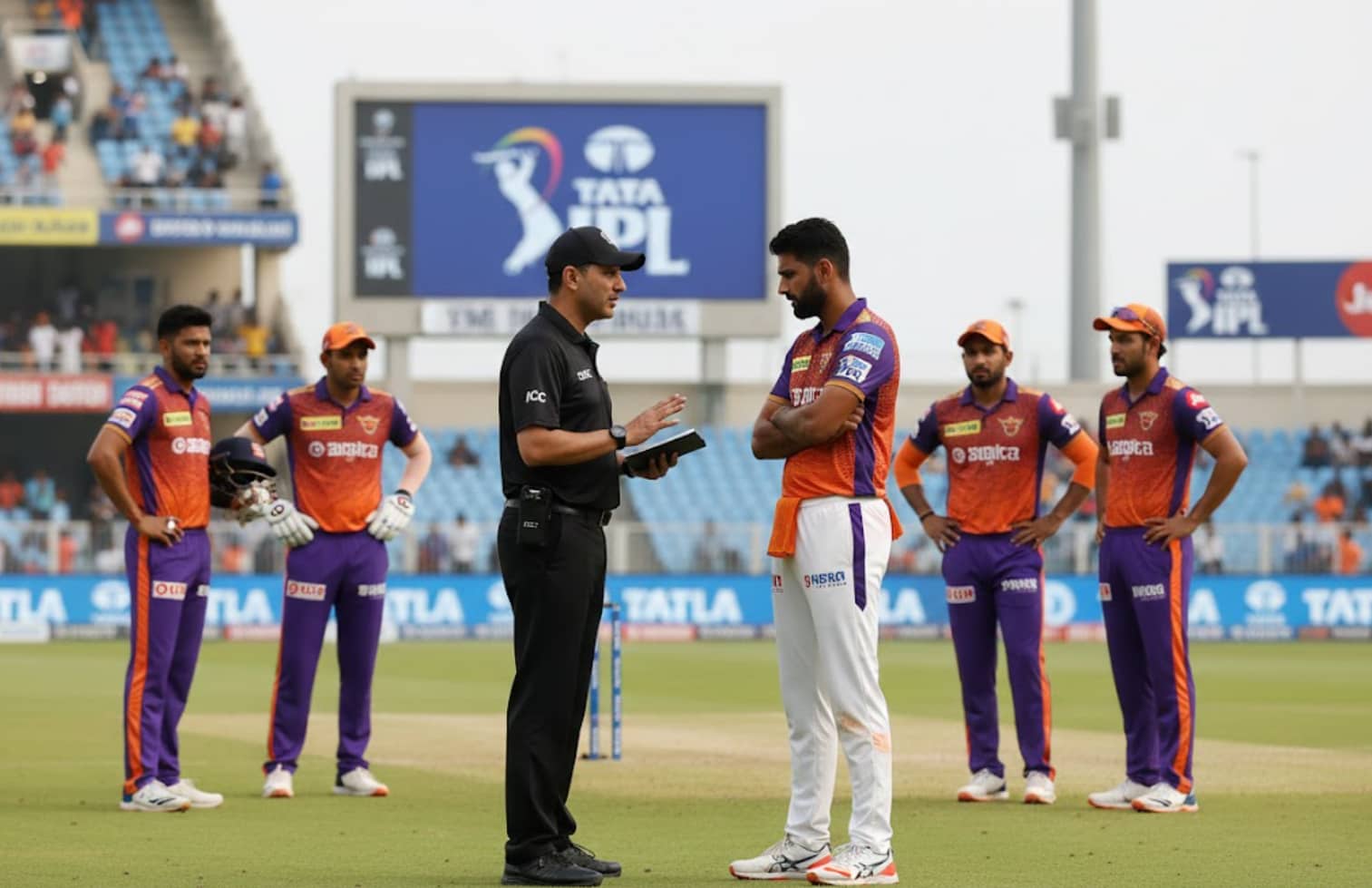
This article documents current IPL playing conditions through structured breakdowns.
It covers strategic time-outs, Decision Review System protocols, over-rate penalties, impact player mechanics, overseas player limits, bouncer regulations, and audience conduct standards that define modern IPL cricket operations.
IPL Rules and Regulations
The following table provides a single-reference overview of all active IPL playing conditions:
| Rule Category | Rule Name | What the Rule Covers | Applies From | Key Limitations / Conditions |
|---|---|---|---|---|
| Match Timing | Strategic Time-outs | Mandatory tactical breaks during each innings | IPL 2009 | One per team per innings, 2.5 minutes each, specific over windows |
| Technology | Decision Review System (DRS) | Technology-based decision challenges | IPL 2018 | Two reviews per team per innings, wides/no-balls reviewable from 2023 |
| Match Pace | Over-rate Penalties | Sanctions for slow bowling progress | IPL 2008 | Fielding restrictions applied if behind schedule, financial fines possible |
| Squad Flexibility | Impact Player Rule | Tactical substitute allowed during the match | IPL 2023 | One substitution per team, five players nominated pre-match |
| Team Selection | Playing XI Declaration | Timing flexibility for team announcements | IPL 2018 | Teams can declare XI before or after the toss |
| Fielding Discipline | Movement Penalties | Sanctions for unfair fielder movement | IPL 2008 | Five-run penalty, ball declared dead |
| Squad Composition | Overseas Player Limits | Restrictions on foreign player participation | IPL 2008 | Maximum four in the playing XI, eight in the full squad |
| Bowling Regulations | Two Bouncers Per Over | Short-pitched bowling allowance | IPL 2024 | Maximum two bouncers above shoulder height per over |
| Powerplay | Fielding Restrictions | Mandatory field placement limits during overs 1-6 | IPL 2008 | Maximum two fielders outside the 30-yard circle |
| Match Conduct | Code of Conduct | Player behavior and disciplinary standards | IPL 2008 | Match referee authority, demerit points system |
Difference Between IPL Rules and T20I Cricket Rules
IPL playing conditions modify the International Cricket Council (ICC) T20 regulations to accommodate franchise cricket requirements. The following table documents functional differences between IPL and standard T20 International cricket:
| Rule Area | IPL Rule | T20I Rule | Practical Impact |
|---|---|---|---|
| Strategic Breaks | Mandatory time-outs in fixed over windows | No mandatory strategic breaks | IPL teams get tactical planning windows mid-innings |
| Player Substitution | Impact player allowed (one per match) | No tactical substitutions permitted | IPL teams can adjust playing XI during match |
| Bouncers Per Over | Two bouncers allowed from 2024 | One bouncer per over maximum | IPL bowlers have more short-ball options |
| Playing XI Declaration | Can be declared before or after toss | Must be exchanged before toss | IPL teams adjust based on pitch conditions post-toss |
| DRS Reviews | Wides and no-balls reviewable from 2023 | Wides and no-balls not reviewable | IPL teams challenge marginal extras calls |
| Over-rate Enforcement | Immediate fielding restrictions applied | Financial penalties primary enforcement | IPL slow over rates impact match directly |
| Squad Size | 25 players maximum per squad | 15-16 players for touring squads | IPL franchises maintain larger rosters |
| Overseas Players | Maximum four in playing XI | No nationality restrictions | IPL mandates domestic player inclusion |
IPL Strategic Time-outs Explained
Strategic time-outs remain mandatory across all IPL matches to provide tactical planning windows and accommodate broadcast requirements. Each team receives one time-out per inning during sthe pecified over ranges.
The following table details time-out mechanics and enforcement:
| Innings Phase | Which Team Takes It | Overs Window | Duration | Penalty for Misuse |
|---|---|---|---|---|
| First Time-out | Bowling team | Between overs 6 and 9 | 2 minutes 30 seconds | The match referee may impose fines for deliberate delays |
| Second Time-out | Batting team | Between overs 13 and 16 | 2 minutes 30 seconds | The match referee may impose fines for deliberate delays |
Time-outs do not count against over-rate calculations. Teams typically use these breaks to adjust field placements, discuss bowling changes, or reset batting strategies between partnerships.
Decision Review System in the IPL
The IPL has implemented DRS protocols across all matches since 2018. Teams challenge on-field decisions using ball-tracking, ultra-edge, and real-time snicko technologies managed by third umpires.
| Reviews Per Innings | Reviewable Decisions | Non-reviewable Decisions | Changes Introduced Over Seasons |
|---|---|---|---|
| Two per team | LBW, caught behind, caught, stumping, wides (from 2023), no-balls (from 2023) | Umpire’s call on impact, run-out decisions by the third umpire | 2018: DRS introduced; 2023: Wides and no-balls made reviewable |
Reviews that result in “umpire’s call” are retained by the challenging team. Unsuccessful reviews reduce remaining challenges. Third umpires must communicate decisions within 30 seconds using available technology.
IPL Over-rate Penalties and Fielding Restrictions
Over-rate monitoring ensures matches complete within broadcast windows. Teams must bowl their overs within designated time limits to avoid in-match penalties.
| Delay Threshold | On-field Penalty | Post-match Sanctions | Impact on Field Placement |
|---|---|---|---|
| Bowling team fails to start final over within allocated time | Maximum four fielders allowed outside 30-yard circle for remaining overs | Match referee imposes financial fines on players based on percentage of match fees | Defending team loses boundary protection during death overs |
Time-outs, drinks breaks, and injury stoppages receive time allowances that do not count toward over-rate calculations. Captains remain accountable for maintaining match pace through bowling rotations.
IPL Impact Player Rule and How It Works?
The impact player mechanism allows teams to substitute one player during a match without requiring injury justification. This tactical tool has altered team composition strategies since its introduction in IPL 2023.
Teams nominate five potential substitutes before the toss. One substitution may occur per team during the match at specified intervals: before an innings begins, after a wicket falls, at the end of an over, or when a batter retires.
| Number of Substitutes | When Substitution is Allowed | Batting/Bowling Implications | Overseas Player Condition |
|---|---|---|---|
| Five players named pre-match, one can be used | Before innings, after wicket, end of over, when batter retires | Impact player can bat and bowl full quota; replaced player cannot return | If overseas impact player used, only three overseas players can start the match |
The replaced player cannot return to the match in any capacity. If a batting team uses the ipl rules impact player option after their innings begins, the substitute cannot bat unless a wicket falls after the substitution. Bowling restrictions for the replaced player do not transfer to the substitute.
IPL Playing Eleven Declaration Flexibility
Teams possess timing flexibility when declaring their playing XI composition. This option enables tactical adjustments based on toss outcomes and pitch assessments.
| Declaration Timing Options | Strategic Advantage | Comparison with Traditional Cricket |
|---|---|---|
| Before toss: Teams submit XI early | Limits opponent’s tactical adjustments | Traditional cricket requires a pre-toss submission |
| After toss: Teams adjust based on batting/bowling first decision | Optimizes balance for chasing or defending | IPL allows post-toss changes, not permitted in international cricket |
This flexibility under the ipl rules for playing 11 enables teams to include additional spinners on turning pitches or pacers on seaming surfaces after viewing conditions. Captains frequently delay declarations when winning the tosses to maximize selection advantages.
IPL Fielding Movement Penalties Explained
Fielding discipline standards prohibit unfair movement that distracts batters during delivery strides. Umpires monitor the fielder and wicket-keeper positioning closely during bowling actions.
| Type of Movement | When Ball is Dead | Run Penalty | Umpire Authority |
|---|---|---|---|
| Fielder makes significant movement while bowler delivers ball | Ball becomes dead immediately upon delivery | Five runs awarded to the batting team | On-field umpire determines unfair movement; decision is final |
| Wicket-keeper moves before ball reaches batter | Ball becomes dead immediately upon delivery | Five runs awarded to the batting team | On-field umpire determines unfair movement; decision is final |
Movement penalties apply regardless of whether the movement impacts the delivery outcome. Repeated violations may result in match referee involvement and conduct point deductions.
Overseas Player Rules in IPL Matches
Franchise squads balance international talent with domestic player development through defined overseas participation limits. These regulations apply to both squad composition and match-day selections.
| Match-day Limit | Squad Limit | Impact Player Restriction | Objective of the Rule |
|---|---|---|---|
| Maximum four overseas players in playing XI | Maximum eight overseas players in 25-player squad | If an overseas impact player is used, only three overseas players can start | Ensures domestic player opportunities and development pathways |
Players classified as overseas are those not holding Indian passports. Associate nation players representing India do not count toward overseas limits. Teams must declare overseas player selections before each match to the match referees.
IPL Two Bouncers per Over Rule from 2024
The 2024 season implemented revised short-pitched bowling regulations tested in domestic tournaments before IPL adoption. This change increased tactical options for pace bowlers across all match phases.
| Season Introduced | Maximum Bouncers | Umpire Signal | Batter Protection |
|---|---|---|---|
| IPL 2024 | Two per over above shoulder height | One arm raised horizontally for the first bouncer; the second signal if two are bowled | The third bouncer in any over is called a no-ball with one run penalty |
Bouncers are defined as deliveries passing above the batter’s shoulder while in a normal batting stance. Deliveries above head height are automatically no-balls regardless of bouncer count. This regulation applies uniformly across powerplay, middle, and death overs.
How do IPL Rules Affect Match Strategy?
Playing conditions directly influence tactical decisions across team selection, bowling management, batting depth, and review usage. Understanding rule applications determines competitive advantages.
Team Selection Strategy:
- Impact player nominations favor all-rounders who provide batting and bowling depth
- Teams carry specialist options in the four substitute slots beyond the starting XI
- Overseas player limits force balanced domestic talent identification
Bowling Rotation Management:
- Over-rate penalties require efficient bowling changes and reduced field adjustments
- Two-bouncer allowance enables aggressive short-ball tactics in the middle overs
- Strategic time-outs offer mid-innings adjustments without disrupting over-rate targets
Batting Depth Optimization:
- The impact player rule allows teams to strengthen their batting order after assessing pitch behavior
- Playing XI flexibility post-toss enables batting-first or chasing-specific lineups
- DRS availability for wides and no-balls influences aggressive shot selection near boundaries
Review Management Discipline:
- Two reviews per innings require selective challenges on marginal decisions
- Wide and no-ball reviews preserve genuine dismissal challenges for later overs
- Umpire’s call retention encourages borderline LBW reviews in crucial match situations
These strategic elements require continuous adaptation as rules evolve across IPL seasons. Teams investing in rule analysis and tactical preparation gain measurable competitive edges over franchises treating regulations as background constraints.
Ipl Rules for Audience
Stadium spectator conduct and digital viewing standards maintain match integrity and venue safety. These regulations apply to all individuals attending IPL matches physically or consuming content through official channels.
| On-ground Conduct | Digital Rules (Replays, DRS Screens) | Code of Behavior | Restricted Actions |
|---|---|---|---|
| No pitch invasion; remain in designated seating areas | DRS replays are shown on stadium screens after third umpire decisions | No abusive language toward players or officials | No laser pointers; no throwing objects onto field |
| Follow venue security instructions during the match | Mobile recording permitted for personal use only | No discriminatory or threatening behavior | No commercial filming without accreditation |
Violations result in ejection from venues and potential bans from future matches. Match officials coordinate with security personnel to enforce spectator standards throughout innings.
FAQs
- What are the main components of IPL rules and regulations 2025?
IPL playing conditions include strategic time-outs, DRS protocols, over-rate penalties, impact player substitutions, overseas limits, bouncer regulations, and fielding discipline standards that modify standard T20 cricket laws.
- How many strategic time-outs occur in each IPL match?
Each team receives one mandatory time-out per inning, totaling four time-outs per match. Bowling teams take theirs between overs 6-9, batting teams between overs 13-16.
- Can teams review wide and no-ball decisions in IPL?
Yes, wide and no-ball calls became reviewable through DRS starting in IPL 2023. Teams use their two allocated reviews per innings for these marginal extras decisions.
- What happens if an IPL team bowls overs too slowly?
The bowling team faces immediate fielding restrictions, allowing only four fielders outside the 30-yard circle for the remaining overs. Players also receive financial fines post-match.
- How does the impact player rule work in IPL?
Teams nominate five substitutes pre-match and can use one during the game. Substitutions occur before innings, after wickets, or at over ends. The replaced player cannot return.
- Can overseas players be used as impact players in IPL?
Yes, but if teams use an overseas impact player, only three overseas players can start in the playing XI to maintain the four-overseas-player match-day limit.
- How many bouncers can IPL bowlers deliver per over?
Bowlers can deliver two bouncers above shoulder height per over starting from IPL 2024. A third bouncer is called a no-ball with penalty runs.
- When do IPL teams declare their playing XI?
Teams can declare their playing eleven either before the toss or after the toss, providing flexibility to adjust based on pitch conditions and batting order.
- What are the overseas player limits in IPL squads?
Each franchise can have a maximum of eight overseas players in its 25-player squad, with a maximum of four overseas players in any match-day playing XI.
- Where can I find the official ipl rules pdf document?
The official IPL playing conditions document is available through the Board of Control for Cricket in India (BCCI) website and IPL official platforms, updated before each season.
Conclusion:
The ipl rules and regulations 2026 represent structured playing conditions that balance competitive fairness, broadcast requirements, and tactical innovation across franchise cricket.
Key takeaways include:
- Strategic time-outs provide mandatory tactical windows during specified over ranges
- Impact player substitutions enable mid-match squad adjustments without injury requirements
- DRS protocols include wide and no-ball reviews alongside traditional dismissal challenges
- Over-rate penalties apply immediate fielding restrictions for slow bowling progress
- Two-bouncer allowance from 2024 increases short-ball tactical options
- Overseas player limits mandate four match-day maximum with impact player conditions
- Playing XI declaration flexibility permits post-toss team composition adjustments
- Fielding movement penalties enforce five-run sanctions for unfair positioning
These regulations define modern IPL operations and require continuous monitoring as playing conditions evolve across seasons.
About the Author
