Not every cricket stadium needs to seat 100,000 fans or have boundaries stretching 90 metres.
Some of the game’s most memorable venues are actually quite compact.
These smaller grounds bring their own character to international cricket.
They create intimate atmospheres and often produce high scoring matches that fans love.
Smallest Cricket Ground in the World By Boundary and By Capacity
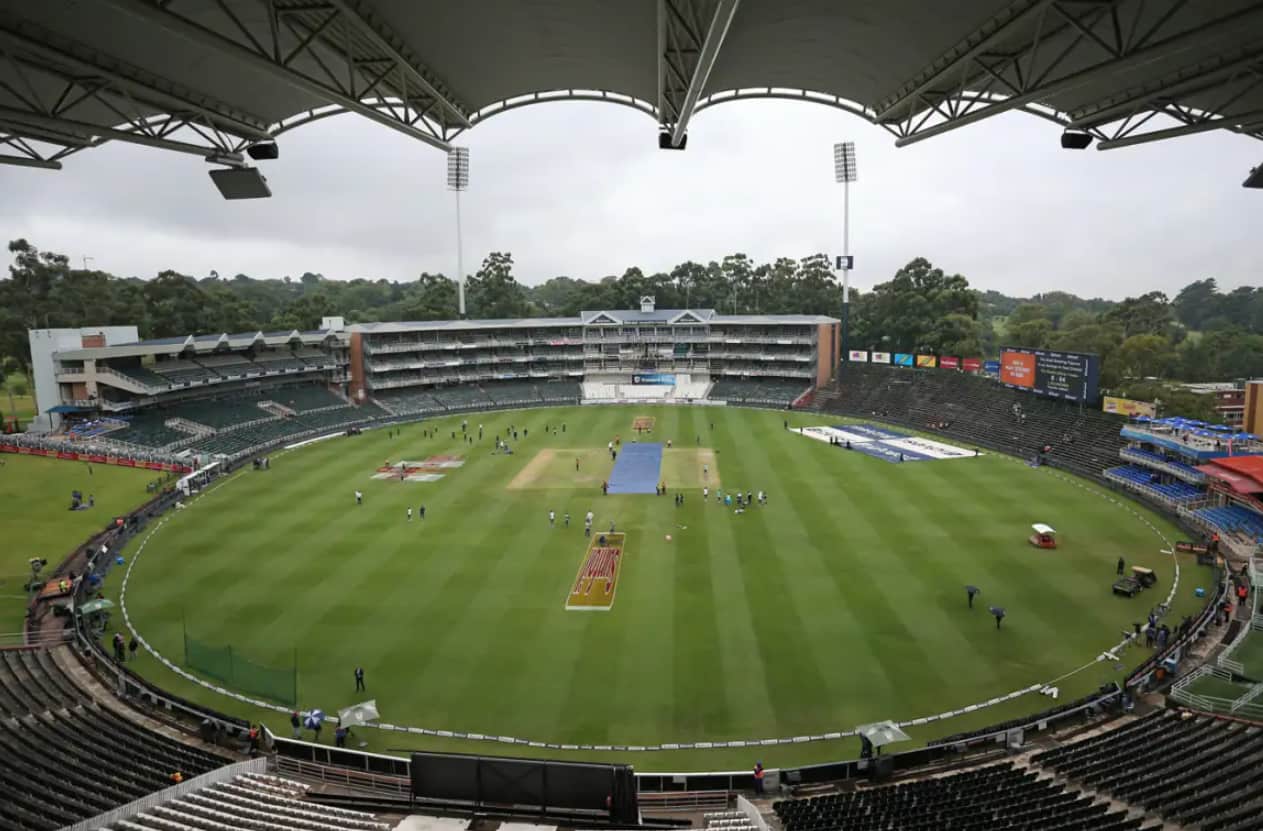
Eden Park holds the Record for the Shortest Boundaries
Eden Park in Auckland takes the title. The straight boundary measures just 55 metres, making it the smallest cricket ground in the world by boundary.
That’s remarkably short. For context, most modern grounds have straight boundaries around 70 to 80 metres.
Eden Park’s dimensions favour batters heavily, which is why it’s a popular venue for limited-overs cricket.
The numbers back this up. Australia smashed 245/5 in a T20I here in 2018.
New Zealand had posted 243/6 in the same match’s first innings.
Both teams set records on the same night, showing exactly what happens when boundaries sit that close.
World’s Smallest Cricket Stadiums by Boundary
Let’s break down the five international grounds with the shortest playing areas. Each brings something different to the table.
| Stadium | City, Country | Shortest Boundary | Boundary Type |
|---|---|---|---|
| Eden Park | Auckland, New Zealand | 55m | Straight |
| The Wanderers | Johannesburg, South Africa | 64m | Square |
| Lord’s | London, England | 65m | Square |
| Eden Gardens | Kolkata, India | 65m | Square |
| Holkar Stadium | Indore, India | 68m | Straight |
The Wanderers Stadium in Johannesburg
The Wanderers comes in second with a 64 metre square boundary. This South African venue is spectacular but compact.
It hosted that crazy 2006 ODI when both teams scored over 400. South Africa and Australia just kept smashing boundaries. The short dimensions definitely played a role in that run fest.
Lord’s Cricket Ground in London
Lord’s is cricket’s home ground, built long before anyone thought about standardizing field sizes. The shortest square boundary measures 65 metres.
That made perfect sense in the 1800s. Bats were heavier, techniques were different, and power hitting wasn’t really a thing. Today it feels tight, especially when modern players step up with light bats and strong wrists.
Eden Gardens in Kolkata
Eden Gardens looks massive on broadcast. The crowd alone makes it feel huge. But the actual playing surface is quite compact, with a 65 metre square boundary.
Here’s why. Most of the stadium space goes to seating. With 66,000 capacity, Eden Gardens needed to maximize stands rather than field size. Players get a smaller playing area, fans get closer to the action.
Holkar Stadium in Indore
India rotates matches across multiple venues. Holkar Stadium joined the circuit in 2006 with an ODI against England.
The straight boundary here is 68 metres, putting it among the world’s shortest. Since 2006, Holkar has hosted T20Is and test matches too. It’s become a regular fixture on India’s calendar.
Tactical View: How Short Boundaries Change Cricket?
Short boundaries shift the entire tactical balance.
Captains can’t set traditional fields. A deep square leg at 64 metres isn’t really deep.
Bowlers face impossible pressure in death overs. One yorker that’s slightly off becomes a six.
They need inch-perfect execution over and over. Missed by two inches, and the ball sails into the crowd.
Batters play more freely. Why block when a gentle push can reach the rope?
Why worry about edges when mishits still clear short boundaries? The psychology changes completely.
I’ve noticed teams abandon conservative strategies at these grounds. Everyone knows high scores are coming.
The side batting second doesn’t panic at 180 in 15 overs. They just keep attacking because they know it’s possible.
Smallest Cricket Ground in the World By Capacity
Now let’s flip it. Which grounds hold the fewest spectators? These venues mostly serve developing cricket nations.
The Grange Club in Edinburgh
The Grange Club wins this category. Scotland’s primary international venue holds just 5,000 fans officially as of 2022.
Scotland has improved steadily as a cricket nation. Most of their international matches happen here.
If they keep progressing, capacity might become an issue. But for now, the Grange Club serves them well.
Their first ODI here was against Bangladesh in 1999. The ground has been Scotland’s cricket home ever since.
Stormont Cricket Ground in Belfast
Ireland reached test status but kept using compact stadiums. Stormont in Belfast holds 6,000 spectators.
Ireland plays matches in Dublin too, but they return to Stormont regularly.
The first international here was an ODI against England in 2006. No test matches yet, but plenty of ODIs and T20Is.
Three More Compact Venues
Maple Leaf Cricket Club in Ontario serves Canadian cricket. Capacity sits at 7,000.
The ground opened in 1954 and became Canada’s second international venue.
The first match was an ODI against Bermuda in 2008.
Traeger Park in Alice Springs holds 7,200. Australia needed more venues as its schedule expanded.
First-class cricket and Big Bash games started here in 2015.
Queens Sports Club in Bulawayo, Zimbabwe, rounds out the list. It held 9,000 for years but recently expanded to 12,497.
Zimbabwe has used it regularly since hosting Sri Lanka for a test match in October 1994.
| Venue | Location | Capacity | First Match |
|---|---|---|---|
| The Grange Club | Edinburgh, Scotland | 5,000 | 1999 ODI |
| Stormont | Belfast, Ireland | 6,000 | 2006 ODI |
| Maple Leaf CC | Ontario, Canada | 7,000 | 2008 ODI |
| Traeger Park | Alice Springs, Australia | 7,200 | 2015 FC |
| Queens Sports Club | Bulawayo, Zimbabwe | 12,497 | 1994 Test |
Do Small Grounds Meet Requirements for Big Matches?
Here’s something interesting. The ICC doesn’t have fixed rules on ground dimensions or capacity.
They have recommendations, not requirements.
For World Cups and major tournaments, the ICC checks safety standards and facility quality.
Can the venue handle crowds safely? Are there proper medical facilities? Does security meet standards?
Revenue matters too. An India vs Pakistan World Cup match could fill any stadium on earth.
Putting that game in a 20,000-seat venue makes no financial sense. Big matches need big grounds.
But group stage matches between smaller nations? A compact stadium works fine.
Better to have 12,000 fans creating atmosphere than 50,000 empty seats in a massive venue.
The Appeal of Smaller Grounds
I’ve spent English summers at county outgrounds watching One Day Cup matches.
The main stadiums host The Hundred, so secondary venues get these matches instead.
There’s real charm to it. You’re close enough to hear the ball thud into gloves. You catch fielders chatting between deliveries.
The crowd is smaller but more knowledgeable. These are serious fans who traveled specifically for cricket.
The atmosphere feels authentic. Big stadiums can feel corporate and distant. Small grounds feel personal.
You’re watching cricket, not attending an entertainment event.
These venues serve important purposes. Emerging nations need places to develop.
Established countries need backup options for busy schedules. Fans need accessible ways to watch live cricket.
How Boundary Size and Capacity Don’t Correlate?
Notice something? The smallest grounds by boundary aren’t the smallest by capacity.
Eden Park has 55 metre boundaries but seats over 50,000. The Grange Club has 5,000 seats but normal field dimensions.
This shows different design priorities. Some maximize seating around a compact field.
Others spread the playing area but don’t build massive stands.
Both approaches work depending on the purpose. Eden Park serves Auckland’s biggest sporting events and needs capacity.
The Grange Club serves Scotland’s cricket program and doesn’t need 60,000 seats.
FAQs
- Which ground has the shortest boundaries in cricket?
Eden Park in Auckland, with a 55 metre straight boundary.
- What’s the smallest international stadium by seating?
The Grange Club in Edinburgh holds just 5,000 spectators.
- Are there minimum boundary requirements?
No. The ICC has recommendations but no mandatory minimum dimensions.
- Why are some famous grounds so small?
Many were built centuries ago when cricket was played differently. Modern power hitting wasn’t considered in their design.
- Can small stadiums host World Cup matches?
Yes, if they meet ICC safety and facility standards, though major matches typically go to larger venues for revenue reasons.
Final Thoughts:
The smallest cricket ground in the world depends on your measurement.
By boundary, Eden Park’s 55 metres wins. By capacity, The Grange Club’s 5,000 seats take it.
Both types of small grounds matter to cricket.
Short boundaries produce exciting, high scoring matches. Limited capacity creates close, personal atmospheres.
These compact venues prove cricket doesn’t need massive infrastructure everywhere.
Lord’s history matters more than its 65 metre boundaries. Scotland’s progress matters more than The Grange Club’s seat count.
Cricket belongs on big stages and small ones. From international test arenas to county outgrounds, each venue adds something to the game.
Small grounds give emerging nations their chance. They provide established countries with flexibility.
And they remind everyone that cricket’s appeal isn’t just about size or spectacle.
Also Check:
About the Author
