In T20 cricket, a bowler’s entire match contribution arrives in just four overs. There is no recovery time, no opportunity to rebuild rhythm across a long spell, and no margin for a single bad over going unpunished by a batting lineup operating at maximum aggression.
The most expensive spells in ipl history reflect this unforgiving reality with brutal clarity. Some of the tournament’s best bowlers — international stars with decorated careers — appear on this list, confirming that talent alone provides no immunity against T20’s most hostile batting environments.
The IPL’s high-scoring era has compressed what was once considered an extraordinary run concession into something that now happens multiple times per season.
Batting lineups assembled from the world’s most destructive T20 specialists attack every delivery with intent, and bowlers who lose length or line even slightly face consequences that accumulate faster than in any other format.
Most Expensive Spells in IPL History
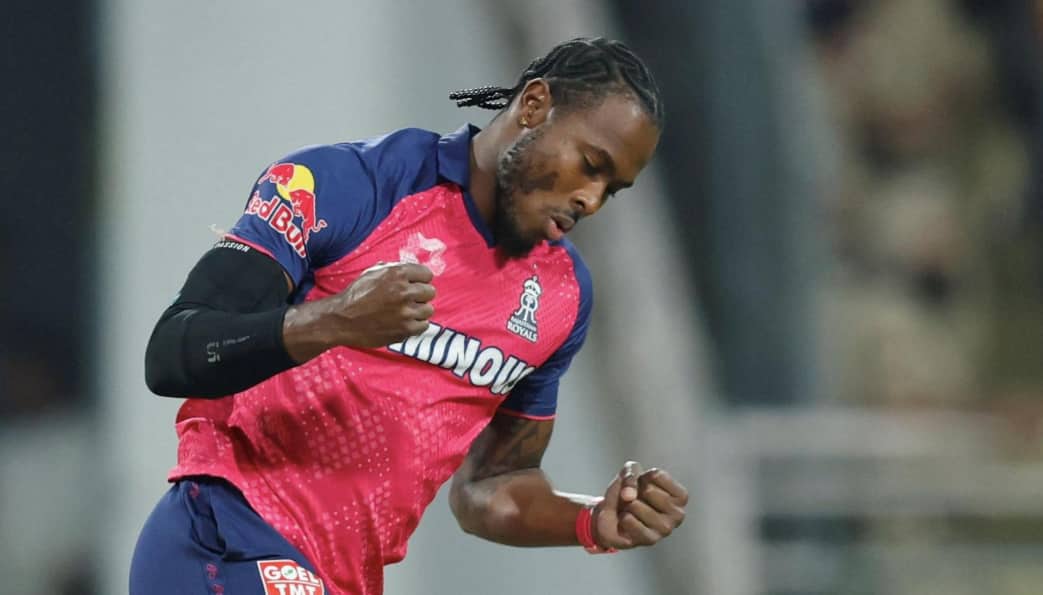
Understanding which spells sit at the very top of this record — and why they happened — reveals as much about the evolution of IPL batting as it does about individual bowling failures on specific evenings.
Most Expensive Spells in IPL History
Most Expensive Spells in IPL History
The most expensive spells in ipl history record list is dominated by internationally recognized bowlers who faced opposition batting lineups operating at the peak of their aggression.
The most expensive spell in ipl list spans from the inaugural era through to IPL 2025, confirming that no era of the tournament has been immune to historically expensive bowling performances.
| Rank | Bowler | Figures | Team | Opponent | Year |
|---|---|---|---|---|---|
| 1 | Jofra Archer | 0/76 | RR | SRH | 2023 |
| 2 | Mohammad Shami | 0/75 | PBKS | SRH | 2024 |
| 3 | W O’Rourke | 2/74 | LSG | RCB | 2025 |
| 4 | Mohit Sharma | 0/73 | GT | DC | 2024 |
| 5 | Basil Thampi | 0/70 | SRH | RCB | 2018 |
| 6 | Yash Dayal | 0/69 | GT | KKR | 2023 |
| 7 | Reece Topley | 1/68 | RCB | SRH | 2024 |
| 8 | Luke Wood | 1/68 | MI | DC | 2024 |
| 9 | Ishant Sharma | 0/66 | SRH | CSK | 2013 |
| 10 | Mujeeb Ur Rahman | 0/66 | KXIP | SRH | 2019 |
The most expensive 4 overs in IPL history belong to Jofra Archer’s 0/76 against Sunrisers Hyderabad in 2023 — a figure that surpassed every previous record and established a benchmark that reflects just how dramatically IPL batting power has escalated in the tournament’s modern era.
What Is Meant by the Most Expensive Spells in IPL?
- An expensive spell in IPL refers to a bowling performance in which a bowler concedes an unusually high number of runs across their allocated four overs in a single match. In T20 cricket, each bowler can bowl a maximum of four overs, making those four overs the complete canvas for their match contribution.
- Any spell conceding more than 50 runs across four overs is generally considered expensive by T20 standards. The ten performances on this list all exceed 60 runs, placing them in a category of exceptional run concession that represents the end of what even the most aggressive IPL batting can produce against quality bowling.
- The distinction between an expensive spell and an expensive single over is important context when comparing across formats. The most expensive spell in T20 international cricket involves the same four-over limit but typically features less concentrated batting depth than an IPL lineup.
- By contrast, the most expensive spell in ODI cricket involves ten-over allocations in a longer format where individual over costs are diluted across a larger sample, making direct comparisons with IPL spell economy figures misleading.
Detailed Bowler-by-Bowler Breakdown
Each of the ten most expensive bowling performances in IPL history carries specific match circumstances that explain — though never entirely justify — how an established international bowler conceded runs at these extraordinary rates.
- Jofra Archer – 0/76 vs SRH (RR, 2023) Archer’s 0/76 against Sunrisers Hyderabad in 2023 stands as the most expensive bowling spell in IPL history and remains the all-time record. His damage began in the powerplay where Travis Head scored 23 runs from a single Archer over — including four boundaries and a six — immediately establishing a run rate that Archer could not recover from across the remaining three overs. SRH’s batting lineup attacked his length relentlessly, with multiple boundary-hitting sequences across all four overs contributing to a combined total that surpassed every previous record in tournament history.
- Mohammad Shami – 0/75 vs SRH (PBKS, 2024) Mohammad Shami’s 0/75 against Sunrisers Hyderabad in 2024 holds the record for the most expensive bowling spell by an Indian bowler in IPL history. The match was played at Rajiv Gandhi International Stadium in Hyderabad, where PBKS posted 245/6 batting first, and Shami’s figures included six boundaries and seven sixes across his four-over allocation. The concentrated boundary count — thirteen scoring shots going to the fence or over it — reflects a day where SRH’s batting lineup dominated every legitimate delivery Shami produced.
- W O’Rourke – 2/74 vs RCB (LSG, 2025) Will O’Rourke’s 2/74 against Royal Challengers Bengaluru on May 27, 2025, represents the most expensive spell in IPL 2025 and the third-most expensive in tournament history overall. Played at Bharat Ratna Shri Atal Bihari Vajpayee Ekana Cricket Stadium, O’Rourke did claim two wickets, making his spell the most expensive in the top ten that included any wicket contribution. Despite those dismissals, RCB’s batting lineup extracted 74 runs from his four overs in a match that coincidentally also featured in the highest run chase in IPL history conversation for RCB.
- Mohit Sharma – 0/73 vs DC (GT, 2024) IPL Purple Cap winner Mohit Sharma’s 0/73 against Delhi Capitals in 2024 was a significant departure from the wicket-taking form that had made him one of the tournament’s most effective death bowlers. His four-over spell produced no wickets and 73 runs — a combined return that placed significant pressure on GT’s ability to defend their total. The performance highlighted how even IPL’s most consistent wicket-takers face matches where their standard variations simply do not function against a batting lineup in full flow.
- Basil Thampi – 0/70 vs RCB (SRH, 2018) Basil Thampi’s 0/70 against Royal Challengers Bangalore in 2018 placed him fifth on the all-time most expensive spells list at a time when 70-run spells in four overs were considered extraordinary rather than part of an emerging pattern. RCB’s batting lineup, featuring some of the most destructive hitting combinations in their franchise history, attacked Thampi’s pace bowling without mercy across all four overs of his allocation, producing a historically expensive return that defined his 2018 season narrative.
- Yash Dayal – 0/69 vs KKR (GT, 2023) Yash Dayal’s 0/69 against Kolkata Knight Riders in 2023 was particularly damaging because of the final-over impact it created on the match’s outcome. KKR’s batting lineup consistently found the boundary against Dayal’s left-arm pace, with the run concession building progressively across each of his four overs rather than arriving in a single catastrophic over. His figures without any wicket contribution meant GT received no bowling return whatsoever to compensate for the 69 runs his spell cost their defending effort.
- Reece Topley – 1/68 vs SRH (RCB, 2024) Reece Topley’s 1/68 against Sunrisers Hyderabad in 2024 featured one of the most expensive single overs in IPL — his final over against Abdul Samad became a most expensive over in IPL talking point after Samad struck consecutive deliveries for four, four, six, six, and four. Topley had managed figures of 1/43 across his first three overs after dismissing Abhishek Sharma, placing his spell in manageable territory before the final over entirely transformed his match figures and ultimately contributed to SRH surpassing a record team total of 263 runs.
- Luke Wood – 1/68 vs DC (MI, 2024) Luke Wood’s 1/68 against Delhi Capitals on April 27, 2024 at Arun Jaitley Stadium in New Delhi reflected a day where DC’s batting lineup dominated MI’s left-arm seam bowling option. Wood’s one wicket across 68 runs delivered an economy rate that contributed to a match total which left MI’s bowling attack significantly exposed. The performance highlighted the challenges facing left-arm seamers operating in flat Arun Jaitley Stadium conditions against a DC batting lineup in aggressive match-winning form.
- Ishant Sharma – 0/66 vs CSK (SRH, 2013) Ishant Sharma’s 0/66 against Chennai Super Kings on May 8, 2013 at Rajiv Gandhi International Stadium holds a particular historical significance as one of the early IPL examples of a match where 60-plus run spells became possible. In the context of the 2013 IPL scoring standards, 66 runs in four overs represented a highly unusual concession. CSK’s batting lineup, featuring several of the tournament’s most experienced and calculated run-scorers, accumulated runs across all phases of Ishant’s spell without offering any chance of a dismissal.
- Mujeeb Ur Rahman – 0/66 vs SRH (KXIP, 2019) Mujeeb Ur Rahman’s 0/66 against Sunrisers Hyderabad on April 29, 2019 at Rajiv Gandhi International Stadium confirmed that the same venue in Hyderabad appears multiple times in this record list — a pattern that reflects the batting-friendly conditions and short boundary dimensions at that ground during the era. Mujeeb’s spin bowling, typically effective in IPL conditions, produced no wickets and 66 runs as SRH’s batting lineup attacked his variations without the mishits that usually punctuate expensive spin spells in the format.
The most expensive bowler in IPL 2025 based on individual spell cost was Will O’Rourke, whose 2/74 against RCB sat at the end of single-match run concessions across the entire season.
Meanwhile, the lowest spell in ipl history — representing the most economical four-over performances — stands in stark contrast to these records, with several bowlers having returned four-over spells conceding fewer than ten runs in conditions and match situations that allowed full defensive bowling control.
Team and Venue Patterns in Expensive Spells
| Venue | Appearances in Top 10 | Key Match |
|---|---|---|
| Rajiv Gandhi Int’l Stadium, Hyderabad | 3 | Shami 0/75, Ishant 0/66, Mujeeb 0/66 |
| M. Chinnaswamy Stadium, Bengaluru | 2 | Thampi 0/70, Topley 1/68 |
| Arun Jaitley Stadium, New Delhi | 1 | Wood 1/68 |
| Ekana Cricket Stadium, Lucknow | 1 | O’Rourke 2/74 |
Rajiv Gandhi International Stadium in Hyderabad appears three times in the top ten — the highest venue frequency on the entire list.
The ground’s batting-friendly pitch characteristics, short square boundaries, and the strength of SRH’s batting lineups across multiple seasons combine to make it the stadium most consistently associated with expensive bowling spells in IPL history.
M. Chinnaswamy Stadium in Bengaluru appears twice, reflecting both the ground’s historically high-scoring reputation and the quality of batting that RCB and visiting teams regularly deploy at their home venue.
Year-by-Year Distribution of Record Spells
| Year | Entries in Top 10 | Bowler(s) |
|---|---|---|
| 2013 | 1 | Ishant Sharma 0/66 |
| 2018 | 1 | Basil Thampi 0/70 |
| 2019 | 1 | Mujeeb Ur Rahman 0/66 |
| 2023 | 2 | Jofra Archer 0/76, Yash Dayal 0/69 |
| 2024 | 4 | Shami 0/75, Mohit 0/73, Topley 1/68, Wood 1/68 |
| 2025 | 1 | W O’Rourke 2/74 |
The year-by-year distribution reveals a sharp acceleration in record expensive spell frequency from 2023 onward.
IPL 2024 alone contributed four entries to the all-time top ten — a concentration that reflects both the impact player rule introduction that season and the escalation of batting lineup quality as franchises optimized their auction strategies around power-hitting depth.
Frequently Asked Questions About the Most Expensive Spells in IPL History
- What Is Considered an Expensive Spell in IPL?
In standard T20 analysis, any four-over spell conceding more than 50 runs is considered expensive relative to the format’s typical economy benchmarks.
At the level that defines the most expensive spells in ipl history, the threshold starts at 60 runs — a figure that was historically rare but has become more common as IPL batting standards have escalated through the 2023–2025 era.
The context of the match and the opposition batting lineup always provide important qualifications.
A bowler conceding 55 runs against a team scoring 240-plus is in a different category to one conceding 55 runs during a normal 170-run first innings — the absolute figure alone does not always tell the complete story of why the spell was expensive.
The economy rate provides a more standardized comparison across spells of different lengths. A four-over spell of 0/76 produces an economy rate of 19 — more than three times the economy rate considered acceptable for quality T20 bowling, and a figure that places the bowler as a significant liability rather than a strategic asset in the match context.
- Can Bowlers Recover from an Expensive Spell?
Historically, the majority of bowlers on this list recovered their form and continued productive IPL careers following their record-setting expensive spells.
Jofra Archer, Mohammad Shami, and Mohit Sharma all returned to wicket-taking effectiveness in subsequent matches and seasons, confirming that a single catastrophic performance does not permanently define a bowler’s IPL identity.
The psychological challenge of recovering from an expensive spell is significant but manageable within a well-structured franchise environment.
Modern IPL franchises employ specialist bowling coaches and performance psychologists specifically to help bowlers process expensive match days, rebuild confidence through training adjustments, and return to match situations with refined plans.
Many bowlers report that their most expensive IPL spells directly triggered the technical improvements that subsequently made them better T20 bowling options.
The analytical resources available within IPL franchises — including ball-tracking data, batting pattern analysis, and over-by-over economy breakdowns — mean that expensive spells are studied in detail for tactical learning rather than treated purely as failures.
- Why Do Bowlers Still Love Playing in the IPL Even After Having Bad Days?
The IPL’s unique competitive environment means that even poor individual performances occur within a tournament that represents the highest level of T20 cricket in the world.
Bowlers understand that the batting quality they face on expensive days is exceptional rather than representative of the conditions they would encounter in any other T20 competition globally.
The financial rewards, the franchise infrastructure, and the development opportunities available within IPL environments make even difficult match days worthwhile investments in a bowler’s professional career.
Playing against the world’s best batters in front of massive crowds and television audiences — even when the results are poor — accelerates skill development faster than performing well in lower-quality competitions.
IPL franchises also provide bowlers with data-driven feedback and technical coaching that transforms expensive match experiences into actionable improvement targets.
Bowlers like Basil Thampi and Yash Dayal used their record expensive spells as motivation to develop additional delivery variations — direct technical responses to the specific batting weaknesses that were exposed on those difficult evenings.
Historical Context – How the Record Has Evolved
| Era | Record at Time | Benchmark Shift |
|---|---|---|
| 2008–2012 (Early IPL) | Below 60 runs per spell | 60+ runs considered extraordinary |
| 2013–2019 (Mid Era) | 66 runs (Ishant, Mujeeb) | 66+ becoming a historical marker |
| 2020–2022 (Transition) | 70 runs (Thampi in 2018) | 70-run spells are rare but occurring |
| 2023–2025 (Power Era) | 76 runs (Archer in 2023) | 70+ spells now multiple per season |
The record’s evolution from the early IPL era through to the current power-hitting period reflects a fundamental change in what T20 batting can produce when franchise investment optimizes for maximum scoring rate rather than balanced cricket skills.
The 76-run record set in 2023 would have been unthinkable in the tournament’s first five seasons — a fact that contextualizes the entire list and explains why seven of the ten entries occurred from 2018 onward.
Conclusion:
The most expensive spells in ipl history represent the most extreme data points in a tournament that has consistently pushed the boundaries of T20 scoring across seventeen competitive seasons.
Every bowler on this list is an international professional. Every spell on this list occurred in a specific match context where opposing batting quality, pitch conditions, and match situation combined to overwhelm even skilled, experienced bowling options.
Understanding these spells as data points in T20’s evolution — rather than simply as individual failures — provides the most accurate analytical framework for interpreting what they mean.
- High-Scoring Era Impact: Modern IPL batting lineups are constructed specifically to maximize run rates from every delivery, creating conditions where even quality international bowlers face match scenarios where their standard plans produce historically expensive returns.
- Four Overs, No Margin: The T20 format’s four-over bowling limit means that a single bad over — or two poor overs — permanently defines a bowler’s match contribution with no opportunity for recovery through extended spells that would be available in longer formats.
- Mental Strength Matters: Every bowler on this list faced the challenge of recovering from a historically difficult match day. The careers of Archer, Shami, and Mohit Sharma confirm that mental resilience and technical adaptation following expensive spells define long-term IPL bowling success as much as any individual match performance.
- Records Are Temporary: With IPL batting continuing to evolve and power-hitting standards rising each season, the 76-run record set by Jofra Archer in 2023 should not be assumed permanent. The same forces that elevated batting averages, team totals, and successful chase records will inevitably continue testing the boundaries of the most expensive spells in ipl history list in seasons to come.
Also Check:
About the Author
