The Indian Premier League isn’t just a cricket tournament; it’s a phenomenon that changed the game forever.
But have you ever wondered who actually started it all?
While we see billionaire team owners and global superstars today, the entire concept came from one man’s vision to shake up traditional cricket.
Lalit Modi, a businessman with no professional cricket background, saw what others couldn’t.
He imagined a league where cricket met Bollywood, where city rivalries ignited fan passion, and where unknown players could become overnight millionaires.
What started as a controversial idea in 2008 became the blueprint for modern franchise cricket worldwide.
In this article, we’ll explore how Modi built the IPL from scratch, the controversies that led to his downfall, and where he stands today.
Who Is the Founder of IPL
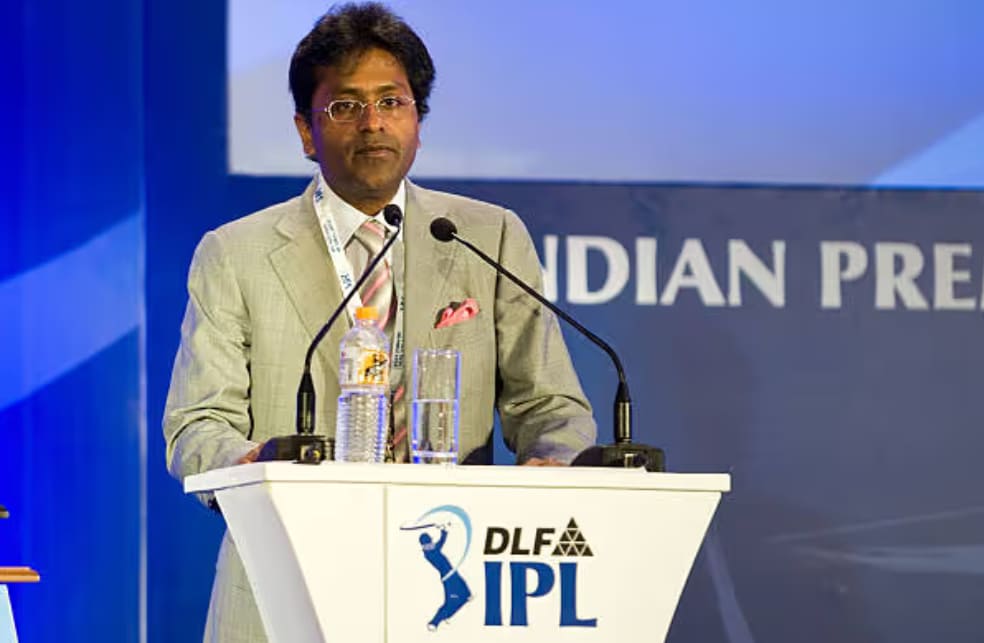
Lalit Modi: The Visionary Behind IPL’s Creation
Lalit Kumar Modi, born on November 29, 1963, in New Delhi, came from a prominent business family but carved his own path in cricket administration.
As the founder of the Indian Premier League, he revolutionized how the sport was consumed, marketed, and monetized globally.
Modi joined the BCCI in the early 2000s and gradually climbed to the position of Vice President.
His business acumen and exposure to American sports leagues like the NBA and NFL shaped his thinking.
He believed cricket needed a franchise model where cities, not just countries, could build loyal fan bases.
The first IPL season in 2008 validated his vision spectacularly.
Eight city-based franchises, player auctions, celebrity owners, and primetime matches created an entertainment product that cricket had never seen before.
Modi served as the league’s first Chairman and Commissioner until 2010, overseeing its explosive early growth.
How the IPL Concept Came to Life?
The idea wasn’t born overnight. Modi had been pitching a franchise-based T20 league since the late 1990s, but the BCCI initially resisted.
The board believed traditional cricket formats were enough and saw no need for experimentation.
Everything changed in 2007 when the rebel Indian Cricket League (ICL) launched, attracting retired players and threatening the BCCI’s monopoly.
The board suddenly needed a counter-strategy, and Modi’s proposal finally got the green light.
Within months, Modi assembled a league structure that borrowed from global sports entertainment.
He introduced player auctions where cricketers became commodities, team ownership by Bollywood stars and industrialists, and matches scheduled for maximum television viewership.
The format was revolutionary—20 overs per side, cheerleaders, music, and a carnival atmosphere that made cricket accessible to non-traditional fans.
The first season in April 2008 exceeded all expectations.
Shah Rukh Khan dancing in the stands, MS Dhoni hitting last-ball sixes, and unknown talents like Shaun Marsh scoring centuries created instant folklore. Who is the godfather of IPL?
The answer is unequivocally Lalit Modi, whose relentless execution turned a risky concept into cricket’s crown jewel.
Lalit Modi’s Influence and Achievements as Chairman of IPL
As the founding Chairman of IPL, Modi didn’t just launch a tournament—he engineered a cultural shift. His achievements during the league’s first three seasons laid the foundation for its current global dominance.
- Billion-Dollar Broadcasting Deals:
Modi negotiated a groundbreaking 10-year broadcasting deal worth over $1 billion with Sony Entertainment in 2008, unprecedented for a cricket league that hadn’t played a single match yet.
- Player Auction Innovation:
The IPL auction system created a transparent marketplace where talent met market value. Players like MS Dhoni and Andrew Flintoff commanded record prices, proving cricketers could earn football-style salaries.
- Franchise Expansion Strategy:
Modi ensured franchises represented India’s major metros—Mumbai, Delhi, Kolkata, Chennai, Bangalore—creating instant regional rivalries that drove passionate fan engagement.
- Global Talent Integration:
By allowing four overseas players per team, Modi internationalized the competition while ensuring Indian players got exposure to world-class cricketers in domestic conditions.
- Entertainment-First Approach
From opening ceremonies featuring Bollywood performances to strategic timeouts with branded content, Modi positioned IPL as sports entertainment, not just cricket.
Under his leadership, the IPL became the world’s most-watched cricket league and established the template that other nations copied with their own T20 franchises.
The Controversy That Ended Modi’s IPL Journey
Modi’s exit from the IPL was as dramatic as his entry. In April 2010, the BCCI suspended him following allegations of financial misconduct and procedural violations during the 2010 season.
- Kochi Franchise Bidding Scandal
Questions arose about Modi’s alleged involvement in rigging the bidding process for the Kochi franchise, with claims that he had undisclosed stakes in certain teams.
- Transparency Issues
The BCCI accused Modi of breaching confidentiality by publicly revealing financial details of franchise agreements and broadcasting contracts without authorization.
- Disciplinary Committee Findings
In 2013, a BCCI disciplinary committee found Modi guilty of multiple charges, including misappropriation, and awarded him a lifetime ban from all cricket administration activities.
Modi left India in 2010 and has since maintained that his departure was due to death threats from underworld figure Dawood Ibrahim, whom he claims he angered by opposing match-fixing.
He has consistently denied all allegations, calling them politically motivated.
The controversy surrounding who is the founder of IPL wife is also emerged during this period, as Modi’s personal life became tabloid fodder following his relationship with former Miss Universe Sushmita Sen, which he made public in 2022.
Lalit Modi Net Worth and Current Status
Lalit Modi net worth has been a subject of speculation for years.
While exact figures remain unconfirmed, reports suggest his wealth ranges between $500 million to $1 billion, accumulated through family businesses in the tobacco, hospitality, and entertainment sectors.
As of 2025, Modi resides in London where he relocated in 2010.
He obtained citizenship from Vanuatu, a small Pacific island nation, though the government recently moved to revoke his passport, citing concerns about facilitating his avoidance of Indian legal proceedings.
Modi has applied to surrender his Indian passport at the Indian High Commission in London, but continues to face legal challenges in India.
The Enforcement Directorate has cases against him for alleged money laundering, while tax authorities claim unpaid dues running into thousands of crores.
Despite his exile, Modi remains active on social media, often commenting on IPL developments and defending his legacy.
Where is Lalit Modi now? In London, far from the cricket board that banned him, but still deeply connected to the league he created.
How IPL Has Grown After Modi’s Exit?
The IPL didn’t collapse after Modi’s departure it soared. Under subsequent chairmen and BCCI leadership, the league has expanded both in scale and commercial value.
| Aspect | Modi Era (2008-2010) | Post-Modi Era (2011-2025) |
|---|---|---|
| Number of Teams | 8 teams | 10 teams (expanded 2022) |
| Media Rights Value | ₹8,200 crore (10 years) | ₹48,390 crore (5 years, 2023-2027) |
| Brand Valuation | $4.13 billion (2010) | $16.4 billion (2024) |
| Player Salary Cap | ₹30 crore per team | ₹100 crore per team |
| Women’s IPL | Not launched | Launched 2023 |
- New Franchise Additions
Gujarat Titans and Lucknow Super Giants joined in 2022, expanding the tournament’s geographic footprint and adding ₹12,700 crore to BCCI’s coffers through franchise fees alone.
- Record Broadcasting Deals
The 2023-2027 media rights deal with Viacom18 and Disney Star shattered records, making IPL the second-most valuable sports league globally after the NFL.
- Global Expansion Initiatives
IPL matches have been held in South Africa and the UAE, testing international markets while maintaining massive viewership in India.
The league’s growth validates Modi’s original vision while proving that institutional frameworks can outlast individual personalities.
Expert Insight: Modi’s Lasting Impact on Cricket Economics
Sports economists recognize Modi’s IPL model as a watershed moment in cricket’s commercialization.
Dr. Ratnakar Shetty, former BCCI administrator, once noted that Modi “understood that cricket was entertainment waiting to be monetized properly.”
The auction system Modi introduced created transparent player valuations for the first time in cricket history.
Before IPL, a player’s worth was subjective; after IPL, market forces determined value.
This forced cricket boards worldwide to reconsider player compensation.
Modi’s entertainment-first approach also changed stadium culture.
Traditional Test cricket relied on pure sport; IPL showed that music, celebrities, and spectacle could coexist with competitive cricket without diminishing quality.
The league’s success directly influenced the creation of the Big Bash League, the Caribbean Premier League, and the Pakistan Super League.
Tactically, the IPL compressed player development timelines. Young Indian cricketers gained exposure to pressure situations, international bowling attacks, and strategic variations far earlier in their careers.
Players like Jasprit Bumrah, Hardik Pandya, and Rishabh Pant are IPL products whose T20 skills translated into success across all formats.
IPL Founder vs Current Leadership: Key Differences
While Modi created the IPL template, the current BCCI leadership has refined and expanded it.
Who is the founder of IPL 2022? Technically, the 2022 season operated under BCCI’s organizational control, with Jay Shah serving as IPL Chairman, a vastly different administrative style than Modi’s centralized control.
Modi operated with unilateral authority, making quick decisions that moved the league forward rapidly but also created governance concerns.
Current IPL administration follows committee-based decision-making with checks and balances, slower but more transparent.
Modi focused on spectacle and controversy, believing any publicity strengthened the brand.
Modern IPL leadership emphasizes stability, corporate partnerships, and long-term sustainability over headline-grabbing drama.
The evolution shows that while visionary founders spark revolutions, institutional frameworks sustain them.
Modi’s creative chaos gave way to structured growth, each phase essential to IPL’s journey.
FAQs
- Who is the founder of IPL Wikipedia?
Lalit Modi is recognized on Wikipedia and in official cricket records as the founder and first Chairman of the Indian Premier League, having launched it in 2008.
- Is Lalit Modi still involved with IPL?
No, Modi was banned for life by the BCCI in 2013 and has no official role in IPL operations or governance.
- What is Lalit Modi’s current citizenship status?
Modi holds Vanuatu citizenship as of 2025, though the country is attempting to revoke it. He resides in London and has applied to surrender his Indian passport.
- Who is Lalit Modi wife?
Modi was previously married to Minal Modi, who passed away in 2018. He publicly announced his relationship with actress Sushmita Sen in 2022, though they are not married.
- How much is the IPL worth today?
As of 2024, the IPL brand is valued at approximately $16.4 billion, making it one of the world’s most valuable sports properties.
Conclusion: The Founder Who Changed Cricket Forever
Lalit Modi’s story is complicated—visionary entrepreneur, controversial administrator, exiled founder.
But his impact on cricket is undeniable. He took a traditional sport resistant to change and forced it into the modern entertainment era.
The IPL didn’t just create a new tournament; it fundamentally altered cricket’s economic structure, player career paths, and fan engagement models.
Modi’s willingness to challenge conventions, ignore critics, and execute boldly made it possible.
Today, the league operates without him, larger and more profitable than ever.
Yet every auction, every franchise valuation, every T20 league worldwide carries Modi’s fingerprints.
He proved that cricket could be both a competitive sport and a commercial spectacle.
Whether remembered as cricket’s revolutionary or its cautionary tale, one thing remains certain: Lalit Modi is the founder of IPL, and his creation outlived his tenure to become cricket’s most powerful institution.
Also Check:
About the Author
