The Indian Premier League has seen uneven performance across franchises since 2008.
While some teams have dominated with multiple titles, others have struggled with consistency and playoff qualification.
Several franchises have maintained poor win-loss records over extended periods.
These teams face issues ranging from weak auction strategies to unstable leadership.
Performance data reveals clear patterns among consistently underperforming sides.
Most Unsuccessful IPL Team in History
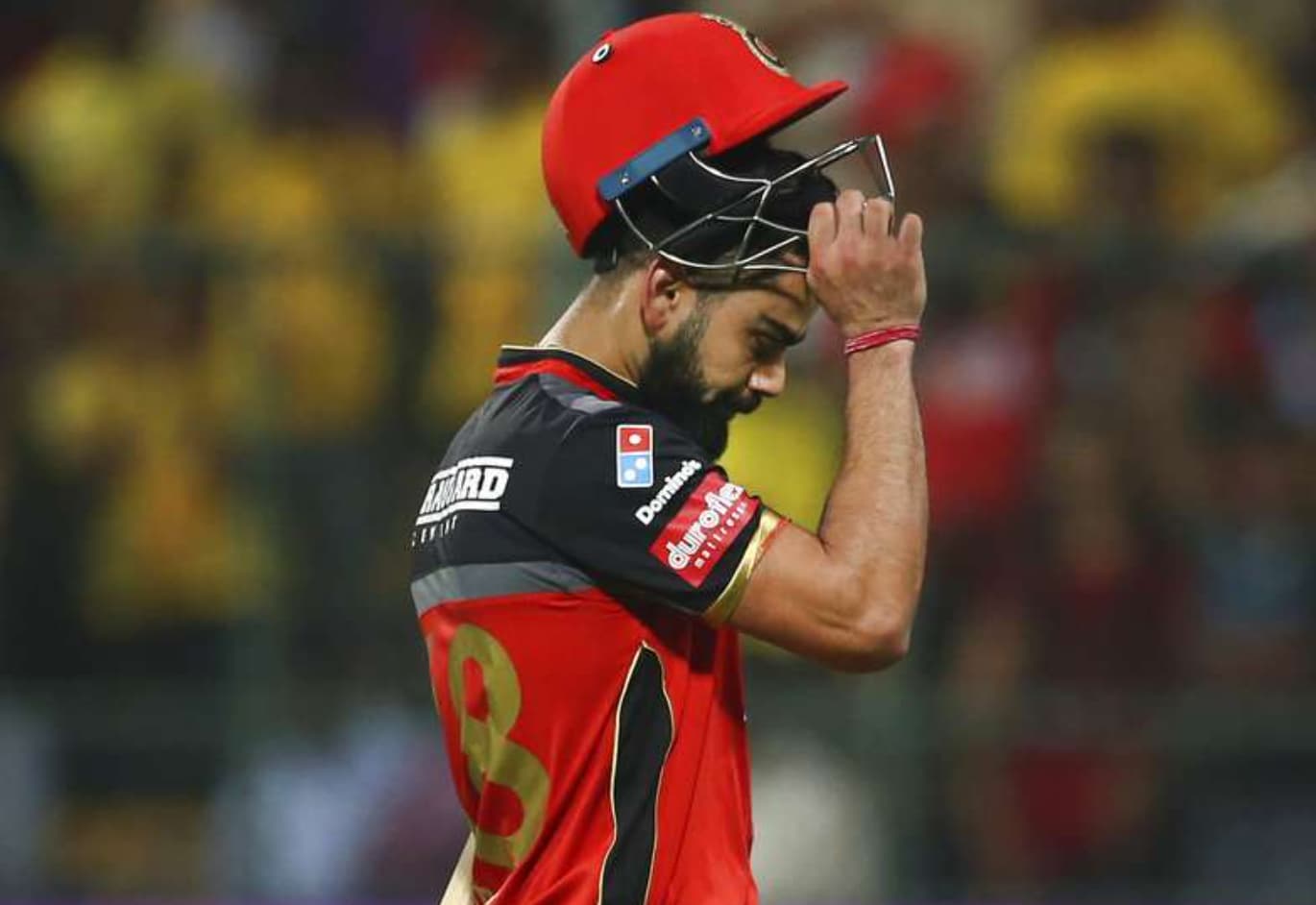
This analysis examines the most unsuccessful ipl team in history based on win percentages, title droughts, and playoff failures.
All statistics are accurate as of IPL 2025.
Most Unsuccessful Teams In IPL History
| Team | IPL Span | Matches Played | Matches Won | Matches Lost | Titles Won |
|---|---|---|---|---|---|
| Delhi Capitals | 2008–2025 | 266 | 118 | 140 | 0 |
| Punjab Kings | 2008–2025 | 263 | 119 | 139 | 0 |
| Royal Challengers Bengaluru | 2008–2025 | 271 | 132 | 132 | 1 (2025) |
| Rajasthan Royals | 2008–2025 | 236 | 114 | 115 | 1 (2008) |
| Sunrisers Hyderabad | 2013–2025 | 196 | 93 | 98 | 1 (2016) |
List of the Most Unsuccessful Teams in IPL History
Delhi Capitals
Delhi Capitals hold a 44.36% win rate across 266 matches. The franchise has never won an IPL title despite representing India’s capital city.
The team suffered consecutive last-place finishes in 2011 and 2013. Between 2014 and 2018, they missed the playoffs for five straight seasons.
Inconsistent player retention and frequent strategy changes have plagued the franchise. Leadership instability across coaching staff and captaincy roles contributed to sustained poor performance.
Delhi’s auction decisions often lacked long-term vision. The franchise struggled to build a stable core group across multiple seasons.
Punjab Kings
Punjab Kings recorded a 45.24% win rate from 263 matches. The franchise reached two finals (2014, 2025) but remains without an IPL title.
Squad composition issues persisted across seasons. The team failed to maintain a balanced combination of batting and bowling strength.
Over-reliance on individual stars like KL Rahul, Chris Gayle, and Glenn Maxwell created pressure points. When key players underperformed, the team collapsed.
Poor retention policies prevented the development of team chemistry. Frequent changes in overseas slots disrupted squad stability year after year.
Royal Challengers Bengaluru
RCB maintained a 48.70% win rate through 271 matches before winning IPL 2025. The franchise endured 18 years without a title despite star-studded lineups.
The team reached finals in 2009, 2011, and 2016 but failed to convert opportunities. Batting-heavy squads often lacked quality bowling depth.
Pressure situations exposed mental weaknesses in crucial matches. Leadership changes failed to address recurring tactical issues.
RCB’s 2025 title win ended their drought. However, historical data places them among franchises with prolonged struggles before achieving success.
Rajasthan Royals
Rajasthan Royals won the inaugural IPL in 2008 but struggled subsequently. Their win percentage stands at 48.30% across 236 matches.
The franchise missed the playoffs in multiple seasons after their early success. Over-dependence on foreign players weakened domestic player development.
Captaincy changes disrupted strategic continuity. The middle and lower order batting frequently collapsed under pressure.
RR failed to replicate the cohesive unit Shane Warne built in 2008. Budget constraints often resulted in weaker squad depth compared to competitors.
Sunrisers Hyderabad
SRH posted a 47.44% win rate from 196 matches. Despite winning the 2016 title, the franchise showed inconsistent performance patterns.
Batting failures dominated several campaigns. Over-reliance on top-order contributions left middle-order batsmen underprepared.
Away match performances highlighted adaptability issues. The team struggled to adjust tactics for different pitch conditions.
Post-2016, SRH failed to maintain championship-level consistency. Squad restructuring attempts yielded mixed results across subsequent seasons.
Win Percentages of All IPL Teams
| Team | IPL Span | Matches | Won | Lost | Win % | Loss % |
|---|---|---|---|---|---|---|
| Gujarat Titans | 2022–2025 | 60 | 37 | 23 | 61.66% | 38.33% |
| Chennai Super Kings | 2008–2025 | 253 | 142 | 108 | 56.12% | 42.68% |
| Mumbai Indians | 2008–2025 | 277 | 151 | 122 | 54.51% | 44.04% |
| Lucknow Super Giants | 2022–2025 | 58 | 30 | 27 | 51.72% | 46.55% |
| Kolkata Knight Riders | 2008–2025 | 265 | 135 | 124 | 50.94% | 46.79% |
| Royal Challengers Bengaluru | 2008–2025 | 271 | 132 | 132 | 48.70% | 48.70% |
| Rajasthan Royals | 2008–2025 | 236 | 114 | 115 | 48.30% | 48.72% |
| Sunrisers Hyderabad | 2013–2025 | 196 | 93 | 98 | 47.44% | 50.00% |
| Punjab Kings | 2008–2025 | 263 | 119 | 139 | 45.24% | 52.85% |
| Delhi Capitals | 2008–2025 | 266 | 118 | 140 | 44.36% | 52.63% |
Impact of Long-Term Poor Performance in IPL Teams
Financial Consequences:
- Reduced sponsor interest leads to lower revenue streams
- Merchandise sales decline with sustained poor performance
- Franchise valuation growth slows compared to successful teams
Player Morale and Retention:
- Difficulty attracting marquee players during auctions
- Established stars prefer franchises with winning records
- Young talent opts for teams with better development structures
Fan Engagement:
- Stadium attendance drops during home matches
- Social media engagement weakens with repeated failures
- Ticket revenue decreases year over year
Brand Value:
- Franchise reputation suffers in cricket markets
- Marketing partnerships become harder to secure
- Long-term commercial prospects diminish
Common Factors Among Unsuccessful IPL Teams
Poor Auction Planning:
- Overspending on star players leaves budget gaps for balanced squads
- Failure to identify value picks in lower price brackets
- Ignoring team composition needs in favor of big names
Weak Squad Depth:
- Insufficient backup options for injuries or poor form
- Over-reliance on playing XI without quality bench strength
- Limited flexibility for tactical changes mid-season
Leadership Instability:
- Frequent captaincy changes disrupt team culture
- Coaching staff turnover prevents long-term strategy implementation
- Management interference in cricketing decisions
Over-Dependence on Star Players:
- Team performance collapses when key players fail
- The supporting cast lacks match-winning capabilities
- Pressure on stars increases with weak team balance
Lack of Domestic Talent Development:
- Insufficient investment in scouting networks
- Neglecting uncapped Indian players in favor of overseas slots
- Poor grooming of young players for pressure situations
Strategies Unsuccessful IPL Teams May Adopt in IPL 2026
Core Player Retention:
- Identify 4-5 key players who fit the long-term vision
- Build a team culture around the retained core group
- Ensure continuity across multiple seasons
Data-Driven Decision Making:
- Use advanced analytics for player selection
- Implement performance metrics beyond traditional statistics
- Analyze opposition weaknesses systematically
Youth and Scouting Investment:
- Establish robust domestic talent pipelines
- Create franchise-specific academies for player development
- Scout emerging talent early in domestic circuits
Squad Balance Over Star Power:
- Prioritize all-rounders for tactical flexibility
- Build complete bowling attacks across pace and spin
- Ensure batting depth extends to number 8-9
Fan Engagement Rebuilding:
- Maintain community outreach programs during poor seasons
- Leverage digital platforms for consistent fan interaction
- Create loyalty programs independent of on-field results
FAQs
- Which team is considered the most unsuccessful historically?
Delhi Capitals hold the lowest win percentage (44.36%) among active franchises and have never won an IPL title despite 18 seasons.
- Which team is worst in IPL 2025?
Chennai Super Kings missed the playoffs in IPL 2025 despite their historical success. However, long-term data places the Delhi Capitals and the Punjab Kings lower in overall performance.
- Can unsuccessful teams become title contenders?
Yes. Royal Challengers Bengaluru won IPL 2025 after 18 years of failure. Proper planning, stable leadership, and balanced squads enable turnarounds.
- Does auction strategy affect long-term success?
Auction decisions directly impact squad balance and depth. Teams with smart retention and value-based bidding outperform franchises chasing star power.
- Are win percentages the only performance metric?
No. Title wins, playoff qualifications, and consistency matter equally. Some teams show better playoff conversion despite similar win rates.
Conclusion:
Performance data clearly identifies the top 5 worst teams in IPL based on win percentages and title droughts.
Delhi Capitals and Punjab Kings lead this list with the no 1 worst team in IPL distinction going to DC with 44.36% wins.
These franchises contrast sharply with the strongest team in IPL, the Gujarat Titans, who maintain a 61.66% win rate.
Analysis reveals that an unsuccessful team in ipl history typically suffers from:
- Poor auction strategies
- Leadership instability
- Weak squad depth
- Over-reliance on stars
The top 10 most unsuccessful ipl team in history share common patterns.
However, RCB’s 2025 title proves that sustained reforms can reverse fortunes. Learning from past failures remains crucial for future success.
Also Check:
About the Author
